
The Nordic service partner for chargers and battery storage.
24 service vehicles in four countries, certified refrigeration technicians, electricians with the highest authorisation and 24/7 on-call service. We handle the entire project – from delivery inspection to day-to-day operation.
24/7 on-call: +47 401 50 004
24 service vehicles – always nearby.
With our own service teams in four countries, we are quickly on site wherever in the Nordics your installation is located.
A total of 24 service vehicles with technicians who have many years of experience from more than 100 installations across the Nordics.
Everything you need – from one company.
We take responsibility for the entire life cycle: procurement, receiving and inspecting the equipment, installation, commissioning, service, repair and 24/7 on-call support.
Charger service
Preventive maintenance and troubleshooting of AC and DC chargers – keeping your installation's uptime as high as possible.
- Periodic maintenance
- Software updates
- On-site and remote troubleshooting
BESS installation
Complete installation and commissioning of battery storage – from single 100 kW systems to large-scale battery parks above 100 MW – for peak shaving, backup power and charging.
- Foundation and placement
- Connection and configuration
- Commissioning with full protocol
Battery cooling systems
Licensed, certified refrigeration technicians service the batteries' cooling systems – critical for lifetime and safety.
- Cooling system service
- Refrigerant replacement
- Leak testing and documentation
Electrical work
We work with electricians holding the highest authorisation – all electrical work is carried out in accordance with current regulations.
- Highest authorisation level
- Grid and switchboard connection
- Declaration of conformity
Repairs
Fast repair of chargers and battery systems – carried out by technicians with many years of field experience across the Nordics.
- Damage repair
- On-site replacement of battery cells and modules
- Rust treatment of containers
Delivery & inspection
We inspect the equipment on arrival – before anything is signed for. Transport damage is documented while your right to claim still applies.
- On-site receiving inspection
- Photo documentation
- Basis for damage claims
The entire project – from start to finish
We can take responsibility for the entire project: planning, procurement, delivery, installation, commissioning and operation.
- Project management
- Coordination of all trades
- One point of contact throughout
Procurement support
We obtain prices from several suppliers and have direct contact with manufacturers of multiple brands – for the lowest possible price with the best quality.
- Price comparison across brands
- Direct manufacturer contact
- Independent recommendations
Service agreement & remote control
With a service agreement we monitor and remotely control your installation – many faults are resolved remotely before they affect operation.
- Real-time remote monitoring
- Remote control and fault resolution
- Priority call-out
24/7 on-call – all year round.
A charging installation or battery storage system that is down costs money every hour. That is why we are on call around the clock – with the tools to fix many faults without a site visit.
Call – we answer
The on-call phone is staffed 24 hours a day, 7 days a week, all year round.
+47 401 50 004Remote first
We connect to the installation remotely and resolve many faults in minutes – without a site visit.
24 vehicles on standby
If a site visit is needed, the nearest service vehicle is rarely far away – in Norway, Sweden, Finland or Denmark.
Hidden transport damage costs more than you think.
Batteries and containers travel halfway around the world before they reach your site. After working on more than 100 installations across the Nordics, we know that rust, moisture ingress, deformed panels and loosened components are far more common than suppliers admit.
If the damage is only discovered after the delivery has been signed for, you are often left without any right to claim – and with a bill that can run to six figures.
Our inspection at delivery gives you documented evidence while the liability still rests with the carrier or supplier.
Our inspection protocol
Typical damage we find at delivery
Real photos from our inspections – this is what «factory-new» equipment can look like when it arrives on site.
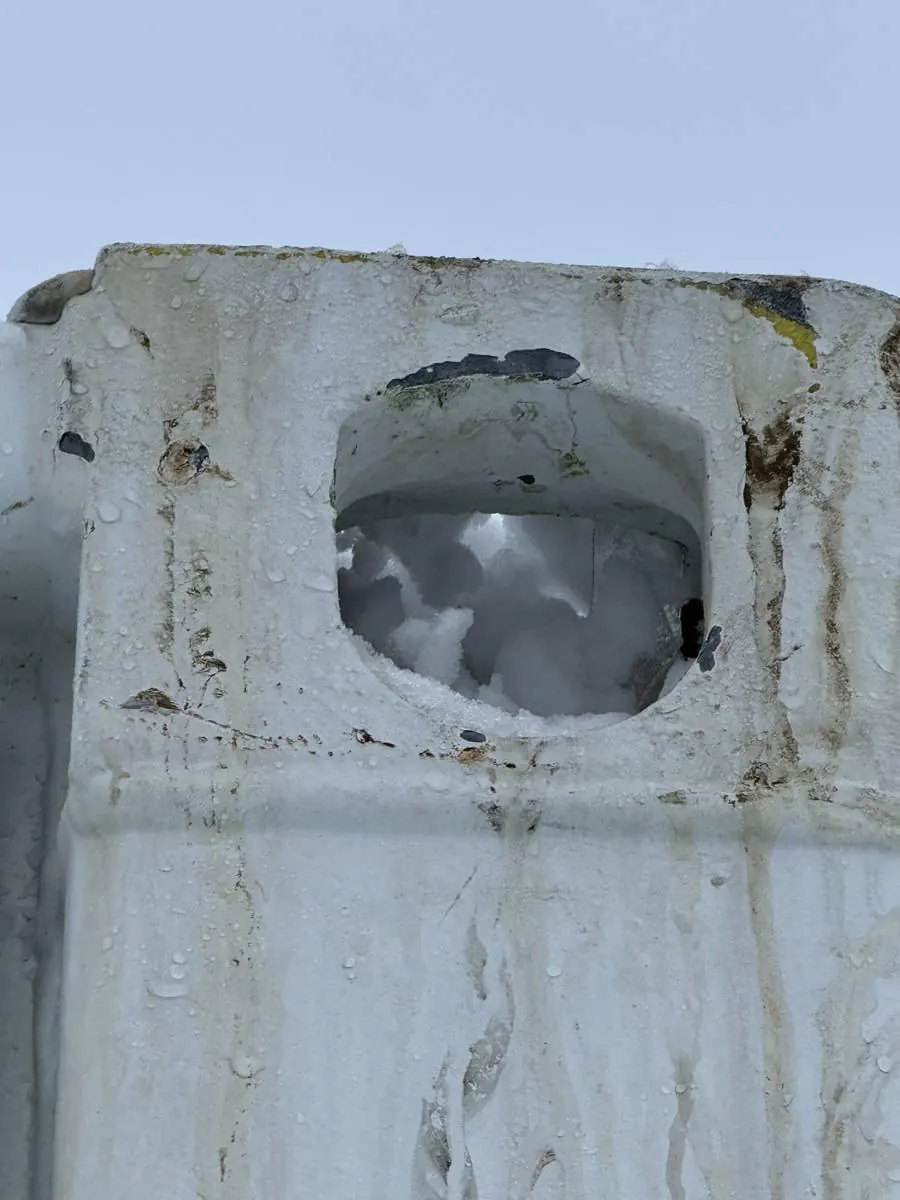 Found at inspection
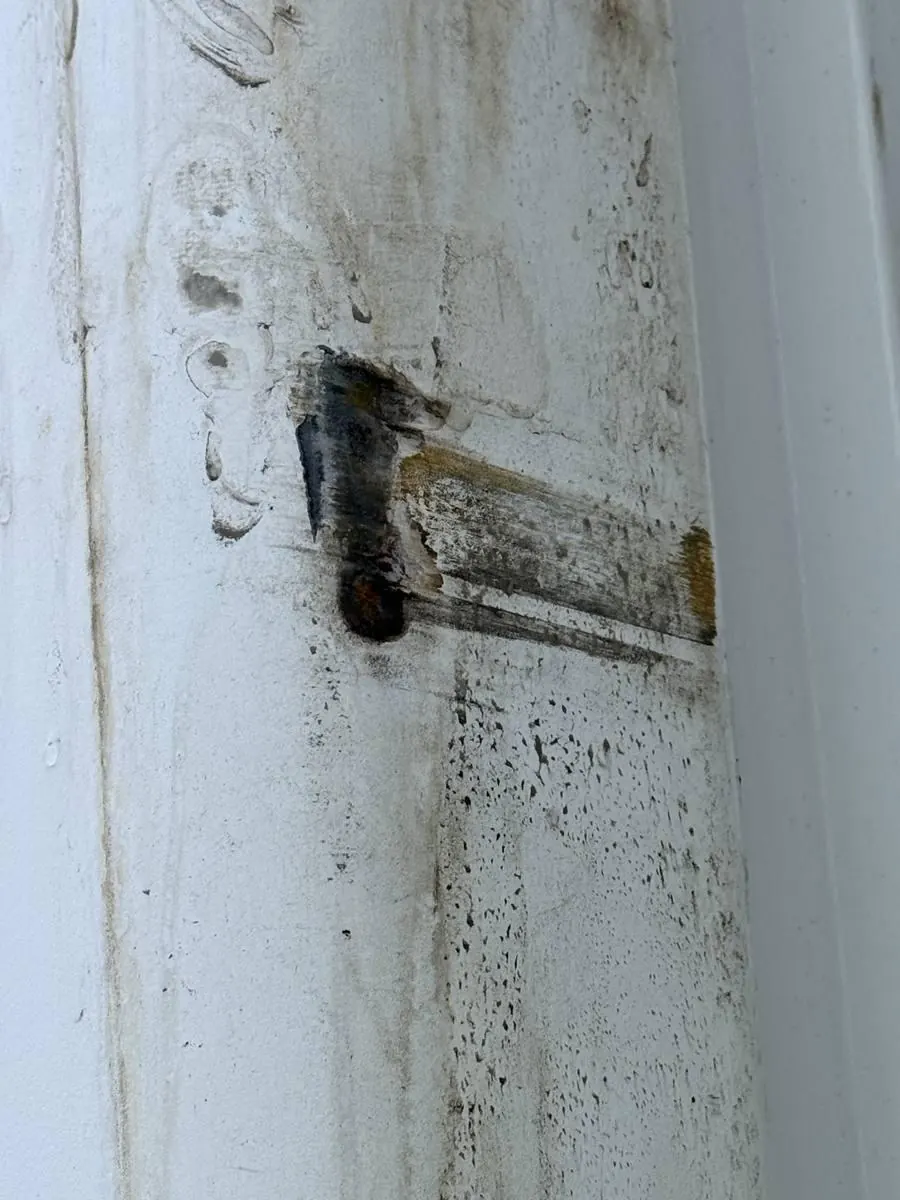 Found at inspection
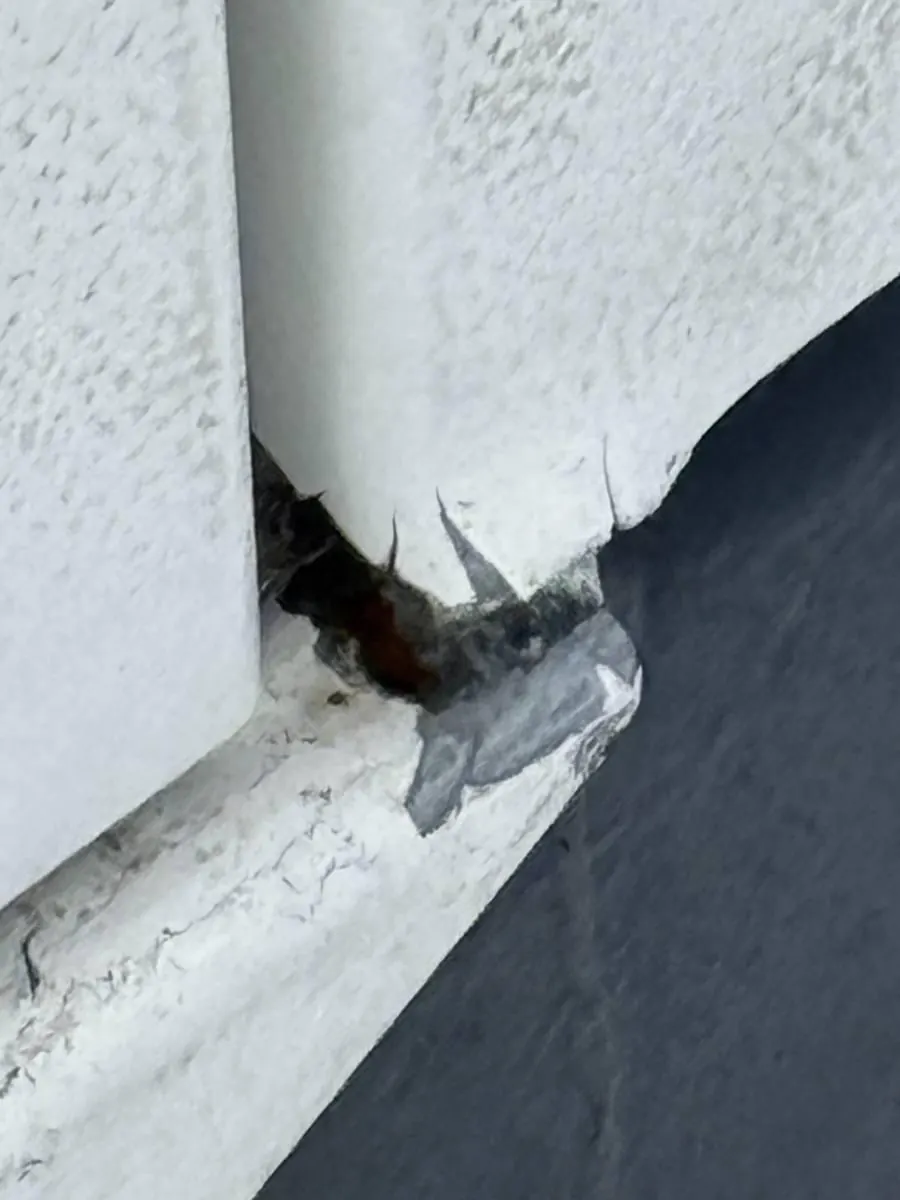 Found at inspection
18 areas of BESS expertise.
We provide specialised technical field services for complete Battery Energy Storage Systems (BESS) – from delivery inspection to technical service, commissioning, handover and long-term maintenance. These are the areas our technicians work with every day, backed by many years of field experience across the Nordics.
Transport damage, container condition, completeness checks, serial numbers, documentation, photographs, damage reports and punch lists.
Structural repairs, welding and metalwork, sealing against water ingress, thermal insulation, rust treatment, protective coating and painting.
Rack and module inspection, connectors, cabling, torque checks, mechanical condition, module replacement and troubleshooting.
Communication checks, alarms, sensors, parameters, system status, troubleshooting and functional verification.
AC/DC connections, communication, parameters, fault finding, functional testing and commissioning support.
Signal and communication verification, alarms, remote communication, control interfaces and integration testing.
Switchgear, auxiliary power, transformer and protection interfaces, cabling, testing and electrical commissioning coordination.
Liquid cooling/HVAC, pumps, glycol circuits, fans, filters, heaters, sensors and auxiliary electrical systems.
Fans, ducts, dampers, filters, air inlets and outlets, airflow checks, sensors and temperature-control interfaces.
Fire detection and suppression interfaces, alarms, emergency-stop circuits, ventilation interlocks and functional safety checks.
Installation, inspection, commissioning, maintenance, piping, valves, filters, dryers and controls.
Oil draining and replacement, filling and topping up, oil sampling and condition checks, leakage inspection and safe isolation.
Pre-energisation inspections, cable and connection checks, auxiliary systems, BMS/PCS/EMS verification, alarms and readiness confirmation.
Energisation support, functional tests, charging and discharging tests, alarm checks, troubleshooting and final punch-list closure.
Receiving, identification, inventory control, protected storage, preparation and dispatch of spare parts and modules.
Coordination and transport of modules, replacement parts, tools and equipment between warehouse, suppliers and sites.
OEM campaigns, rework, troubleshooting, component replacement, technical upgrades and warranty-related field activities.
Scheduled inspections, preventive maintenance, troubleshooting, corrective service, spare-parts support and lifecycle service.
Before and after – see the difference for yourself.
Drag the slider to see the results of our work – real photos from our projects across the Nordics.
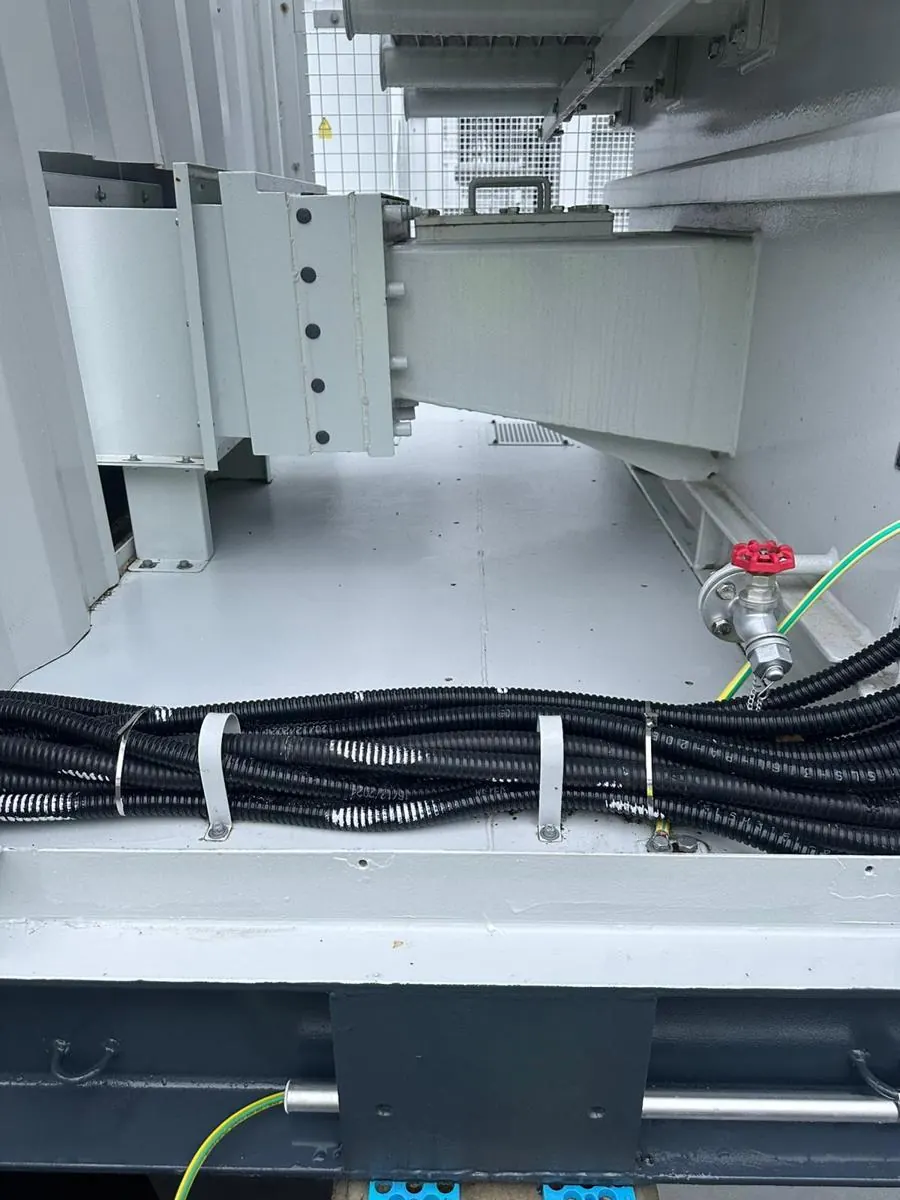
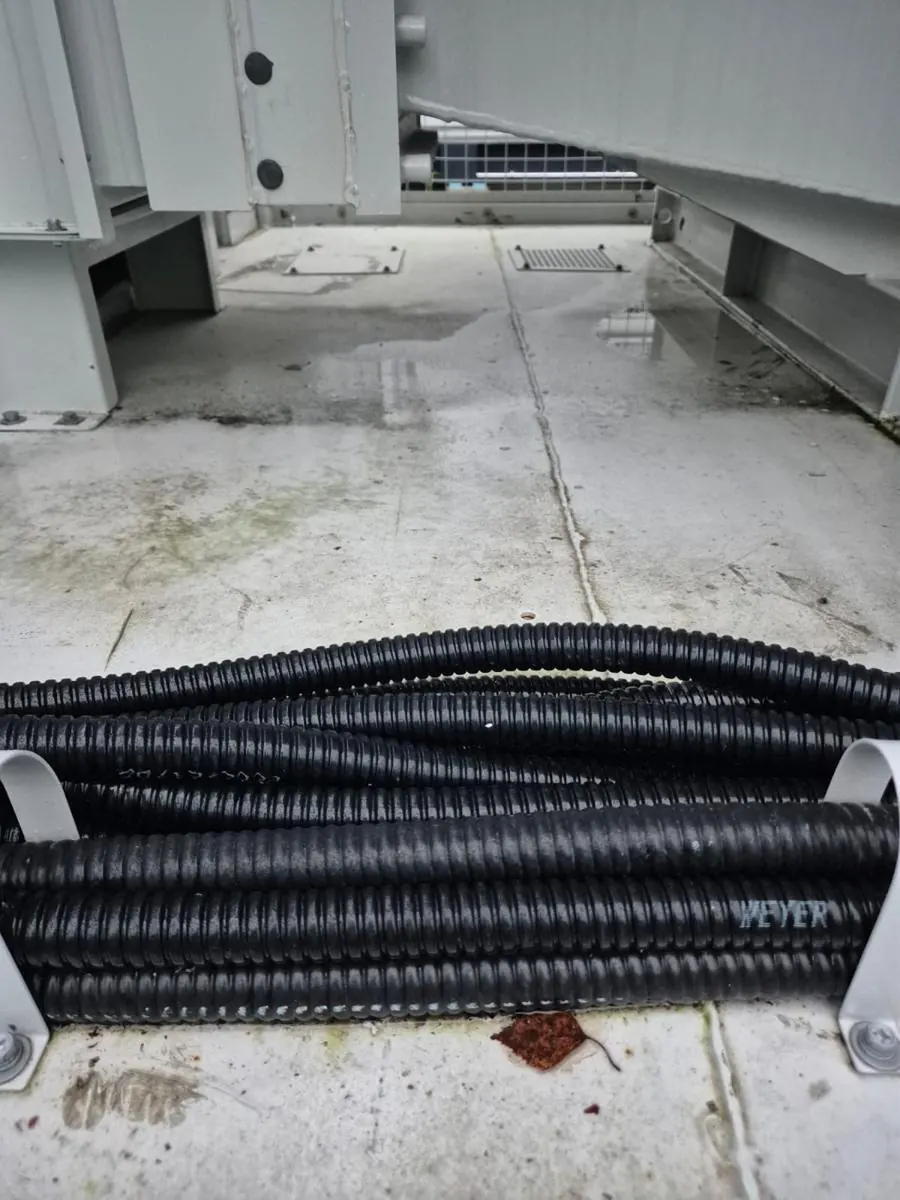 ⇔BeforeAfter
Cable conduits left loose at delivery – fastened, secured and tidied by our team
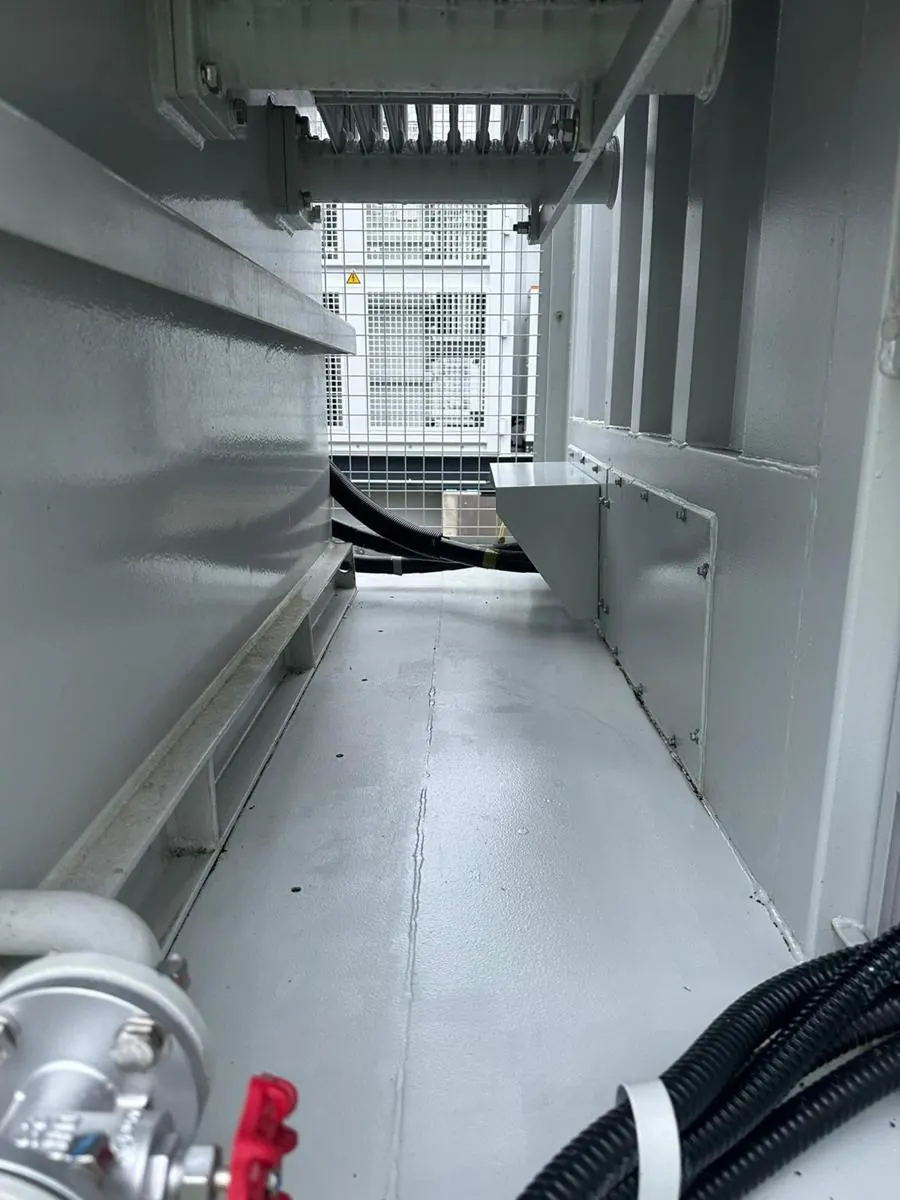
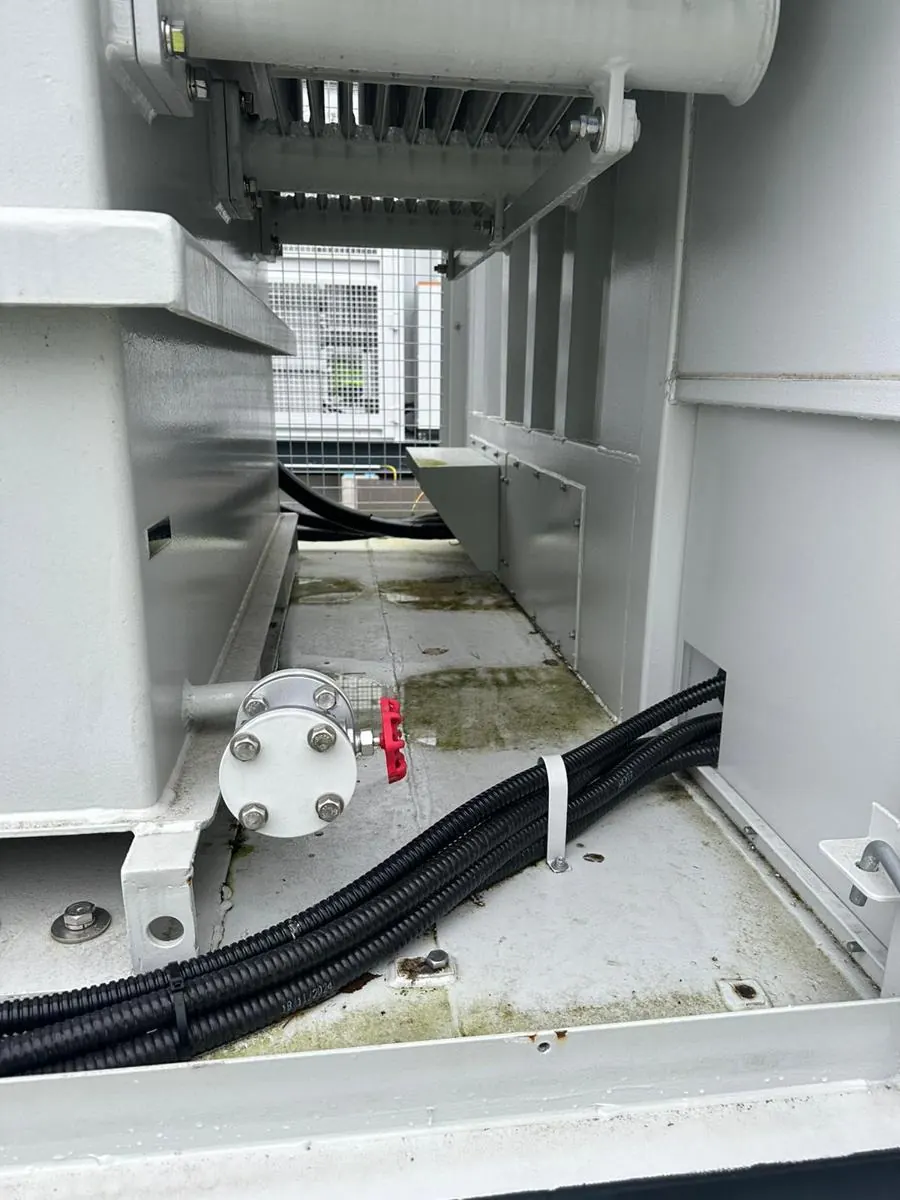 ⇔BeforeAfter
Transformer room floor – cleaned, treated and painted after moisture and algae damage
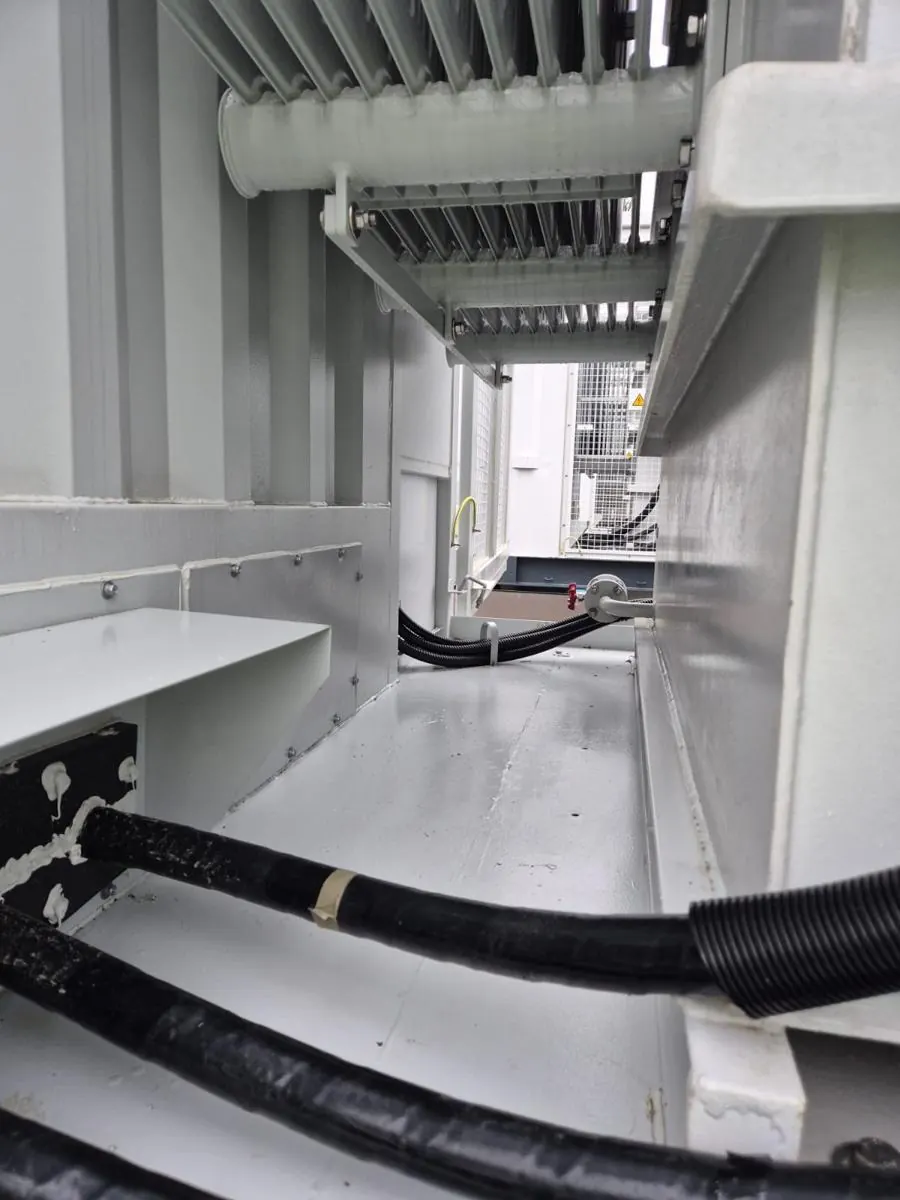
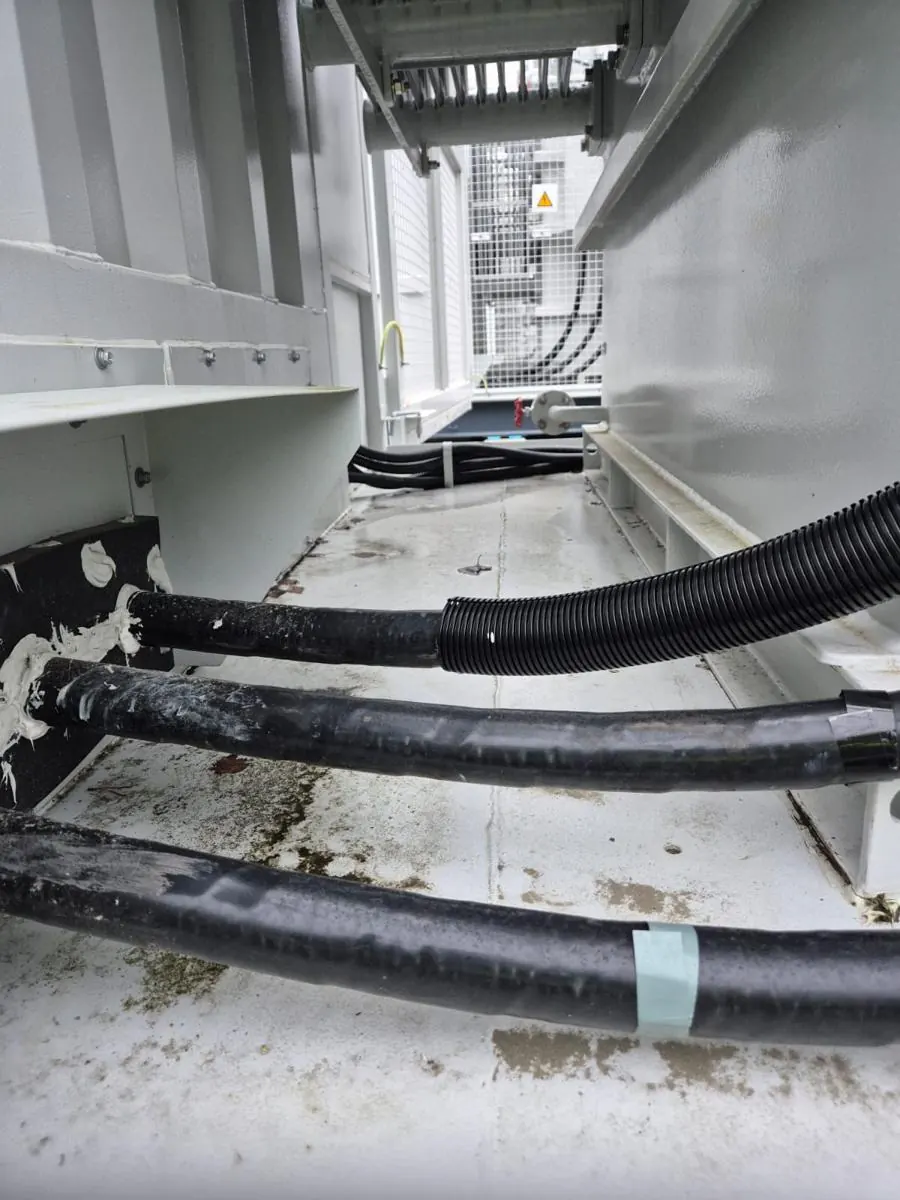 ⇔BeforeAfter
Cable entries and floor – cleaned, sealed and made ready for operation
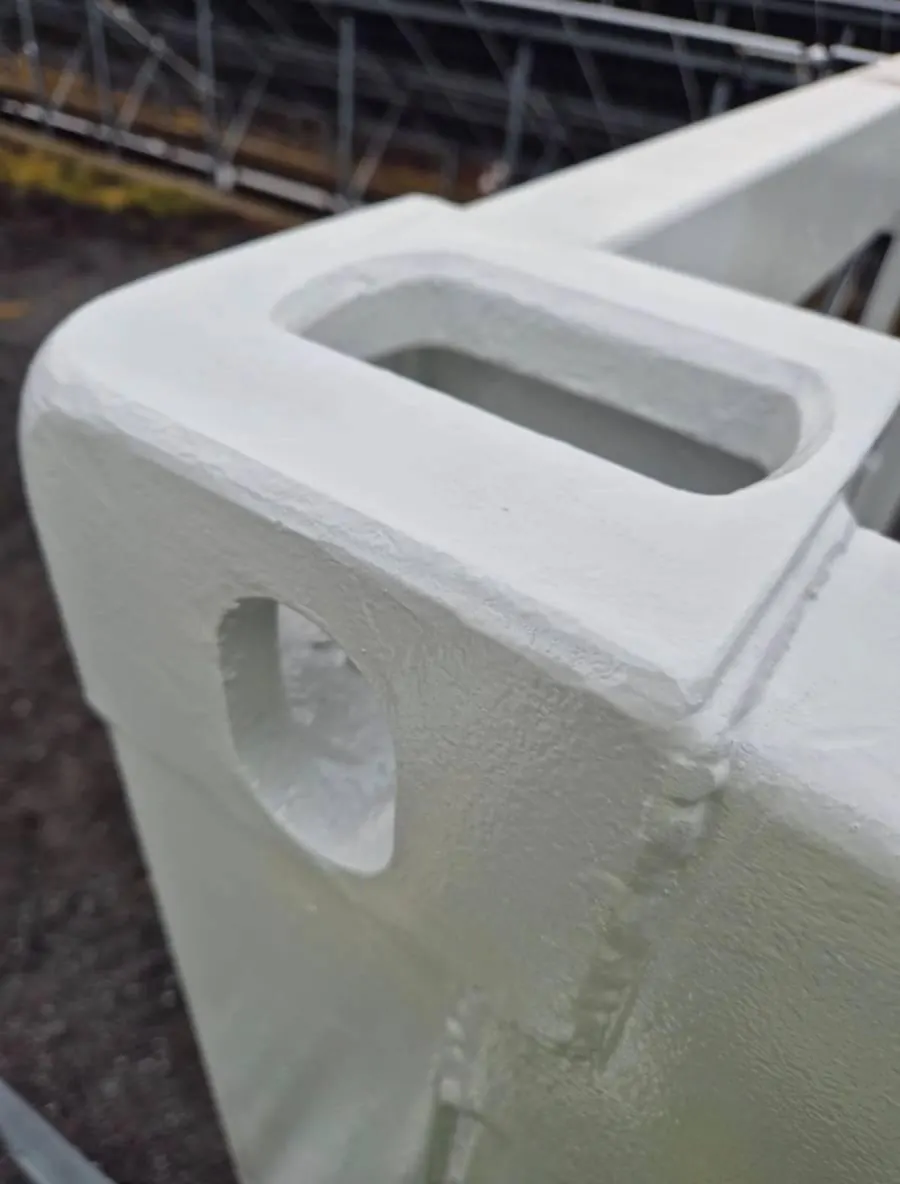
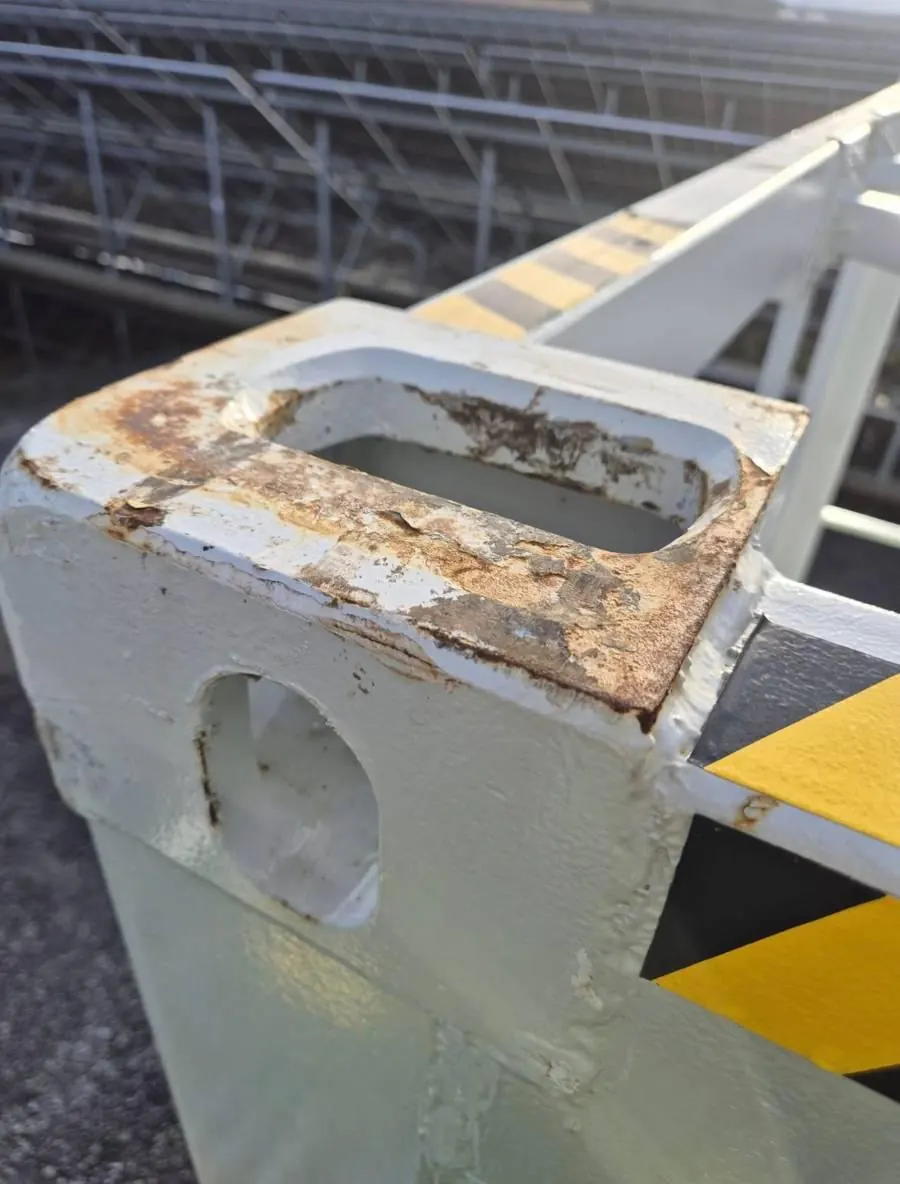 ⇔BeforeAfter
Corner casting on BESS frame – rust removed, welds sealed and surface repainted
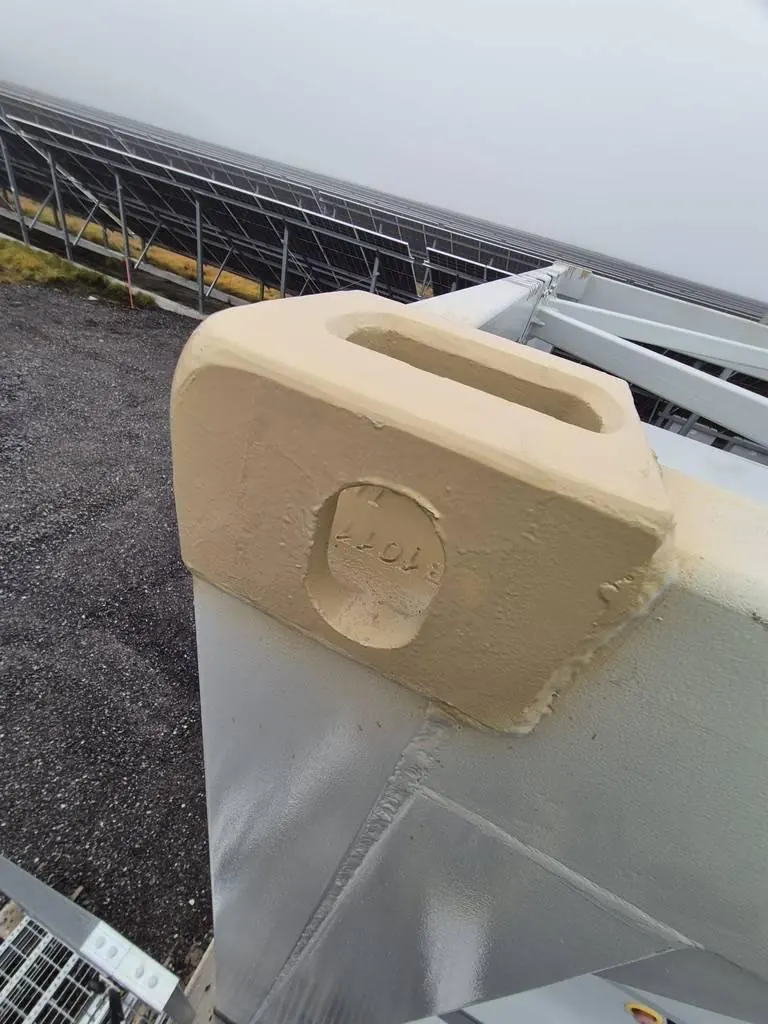
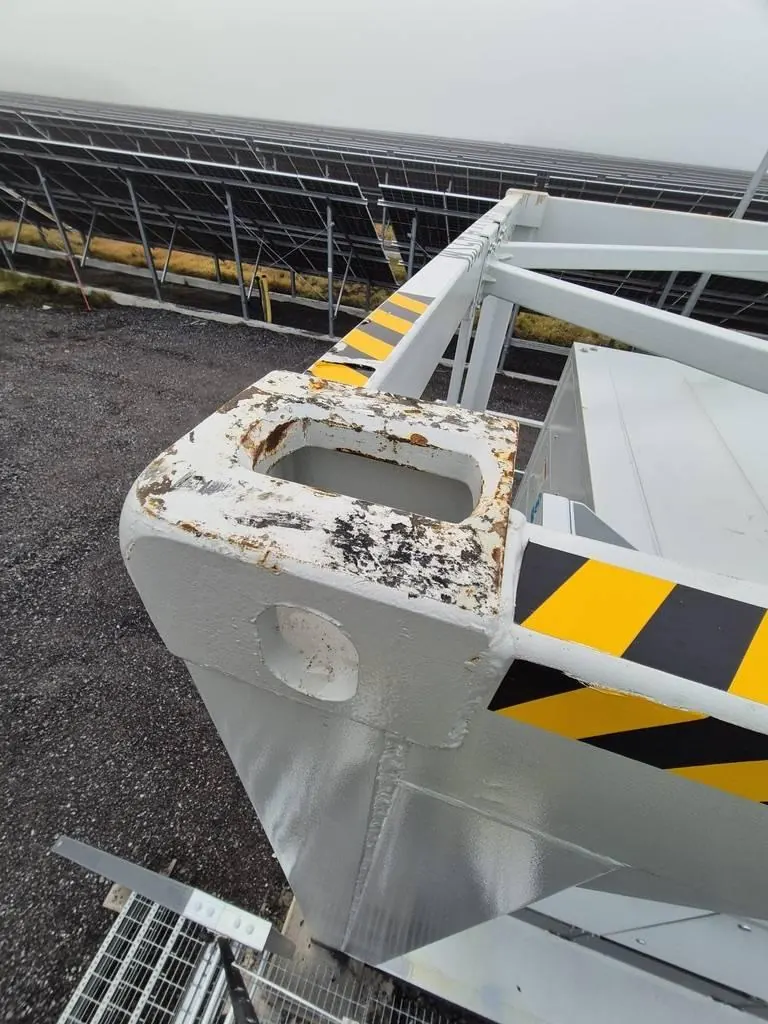 ⇔BeforeAfter
Lifting corner with extensive corrosion – blasted and primed with corrosion protection
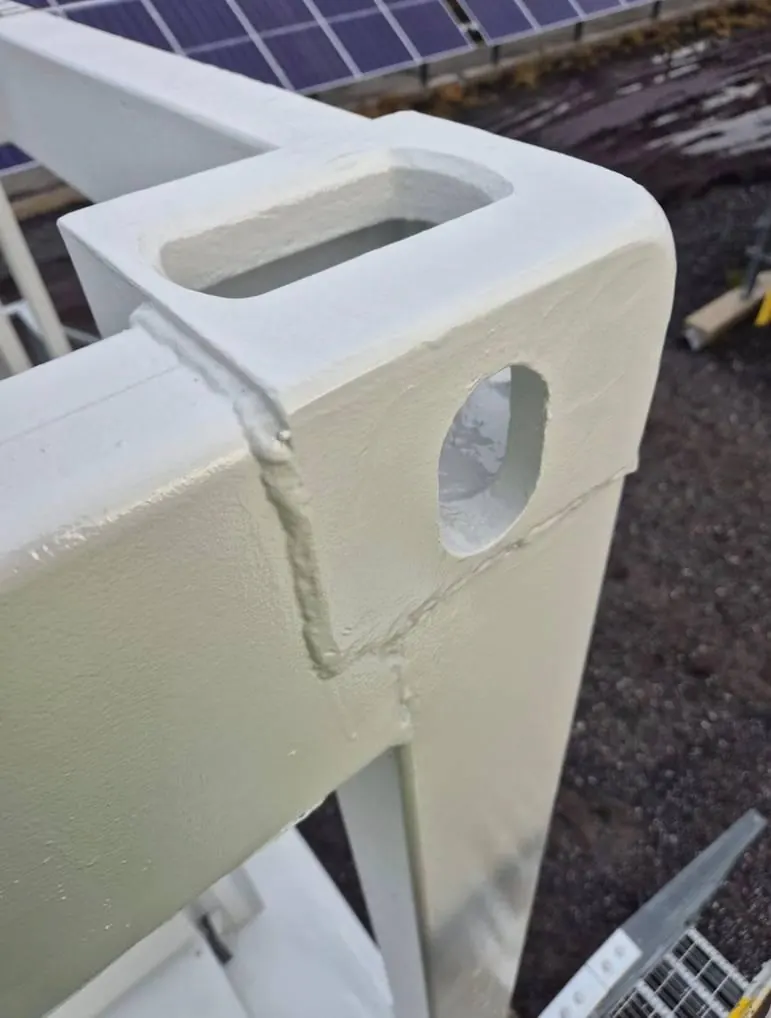
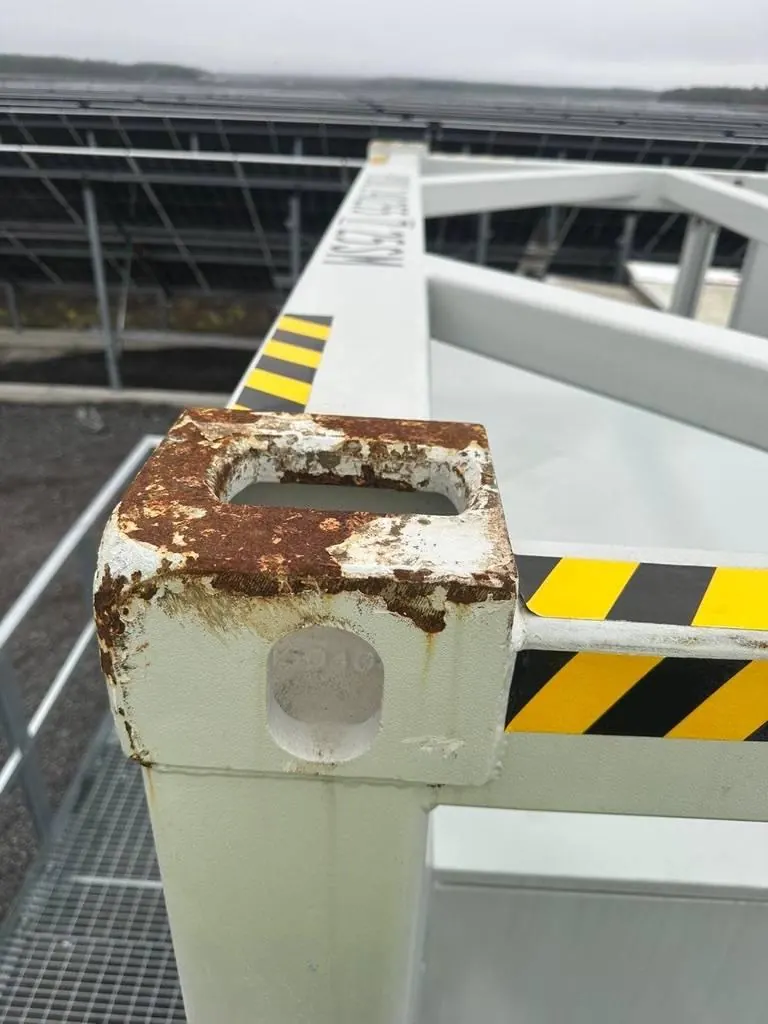 ⇔BeforeAfter
Container corner with deep rust – repaired and fully repainted on site
The gallery is continuously expanded with new projects from across the Nordics.
From the field – delivery, lifting and cell replacement
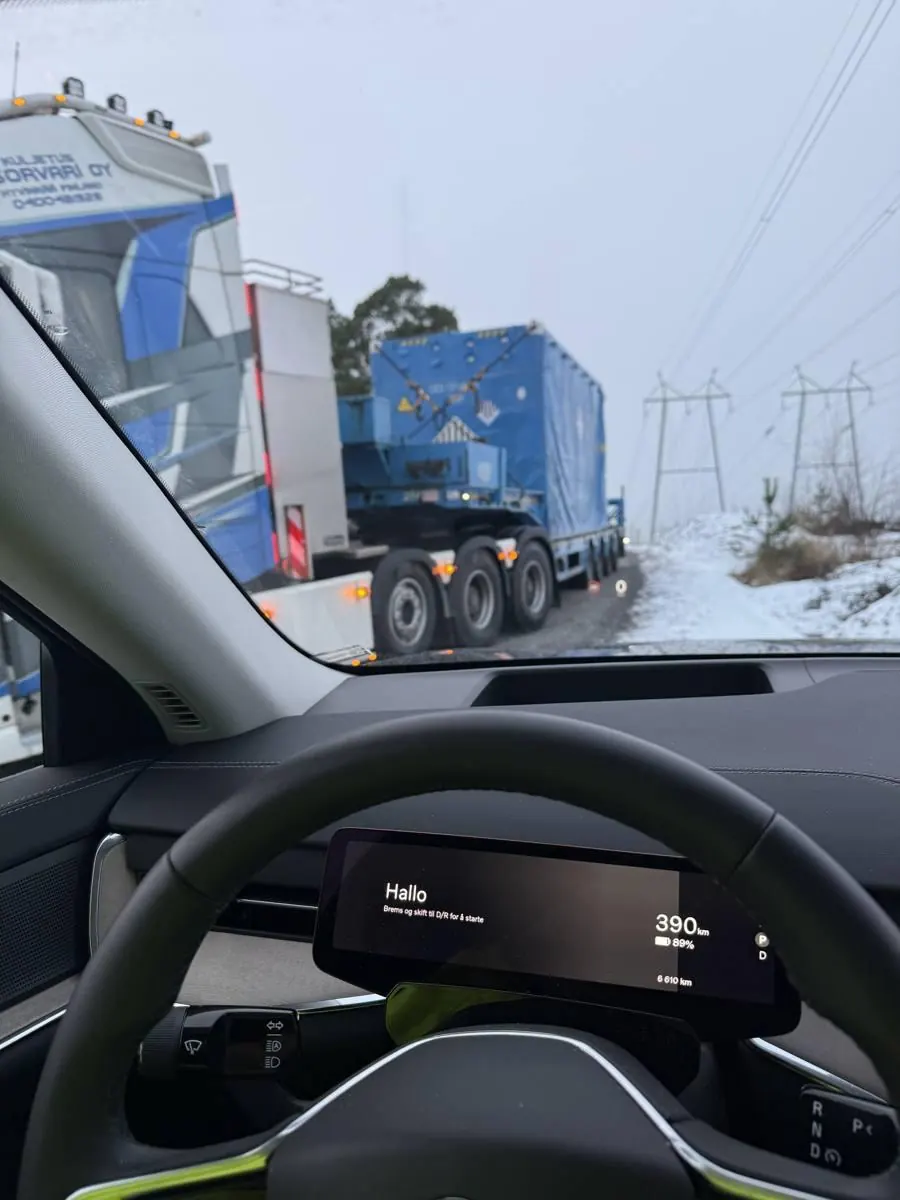
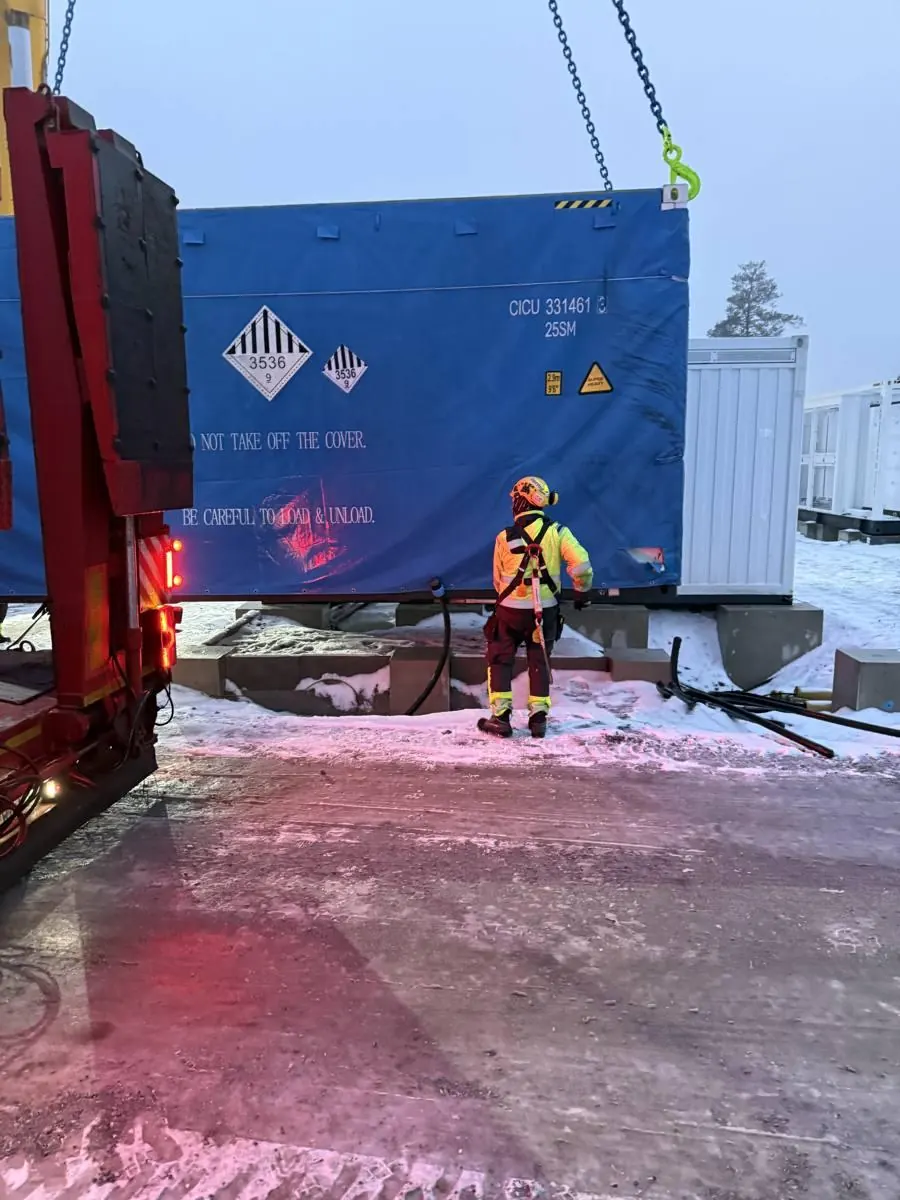
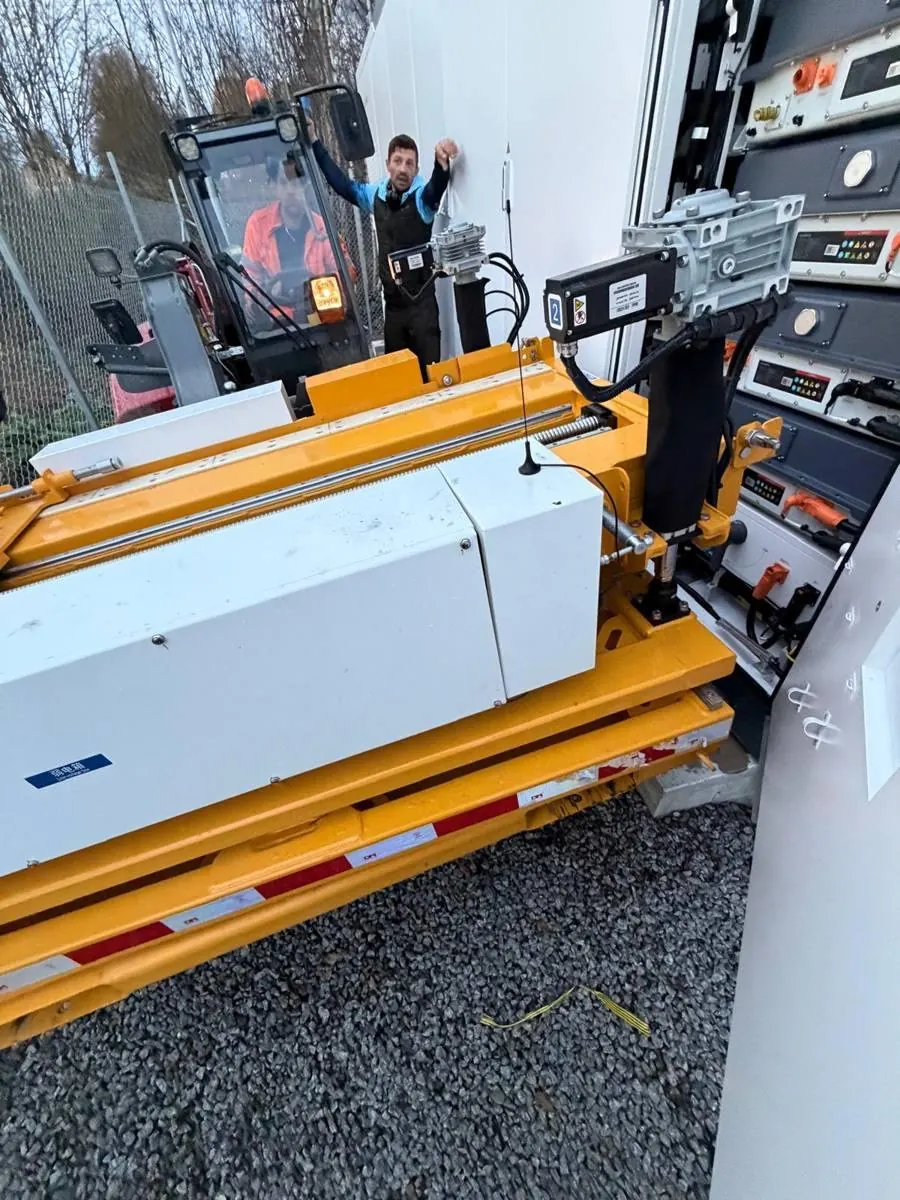
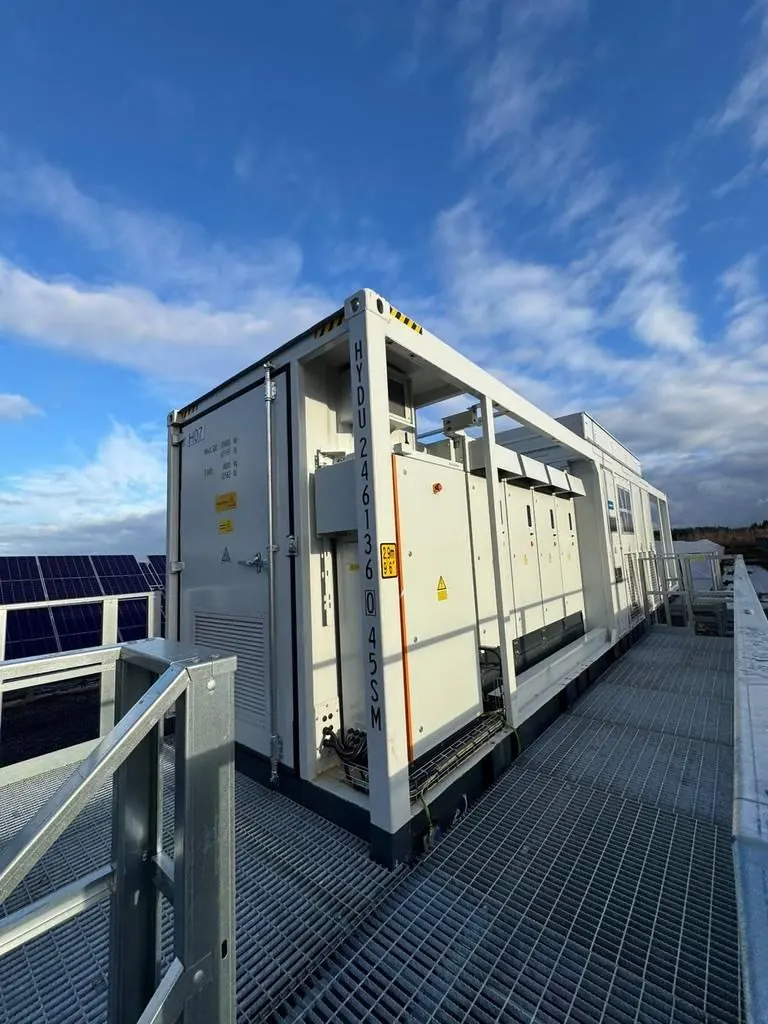
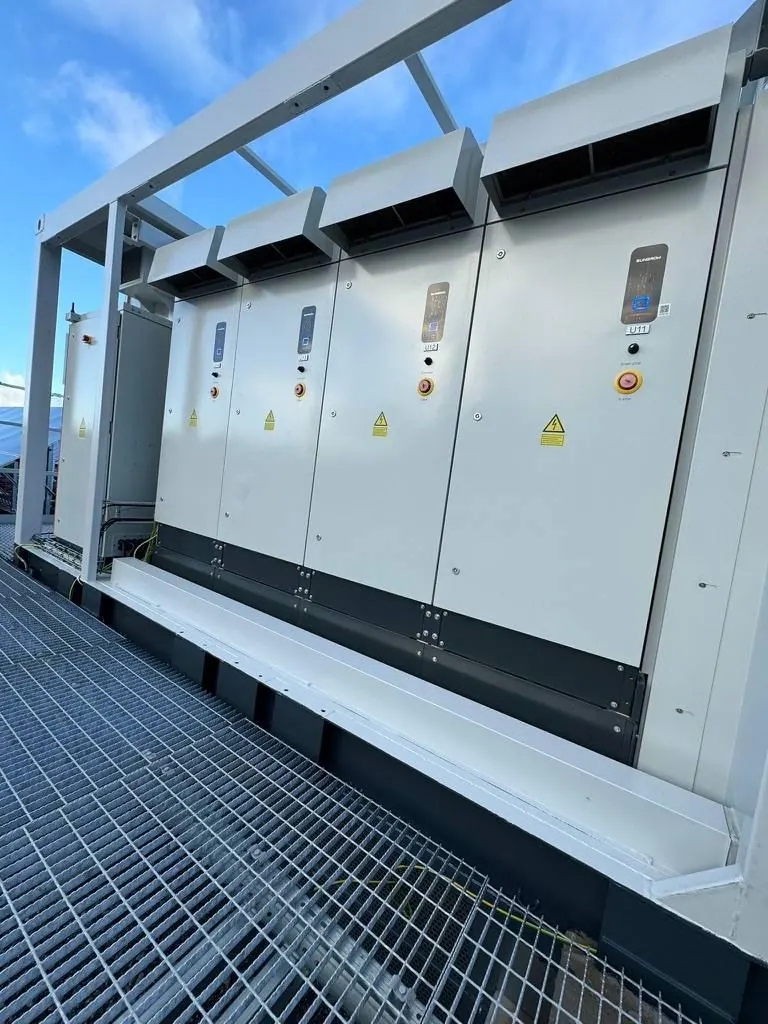
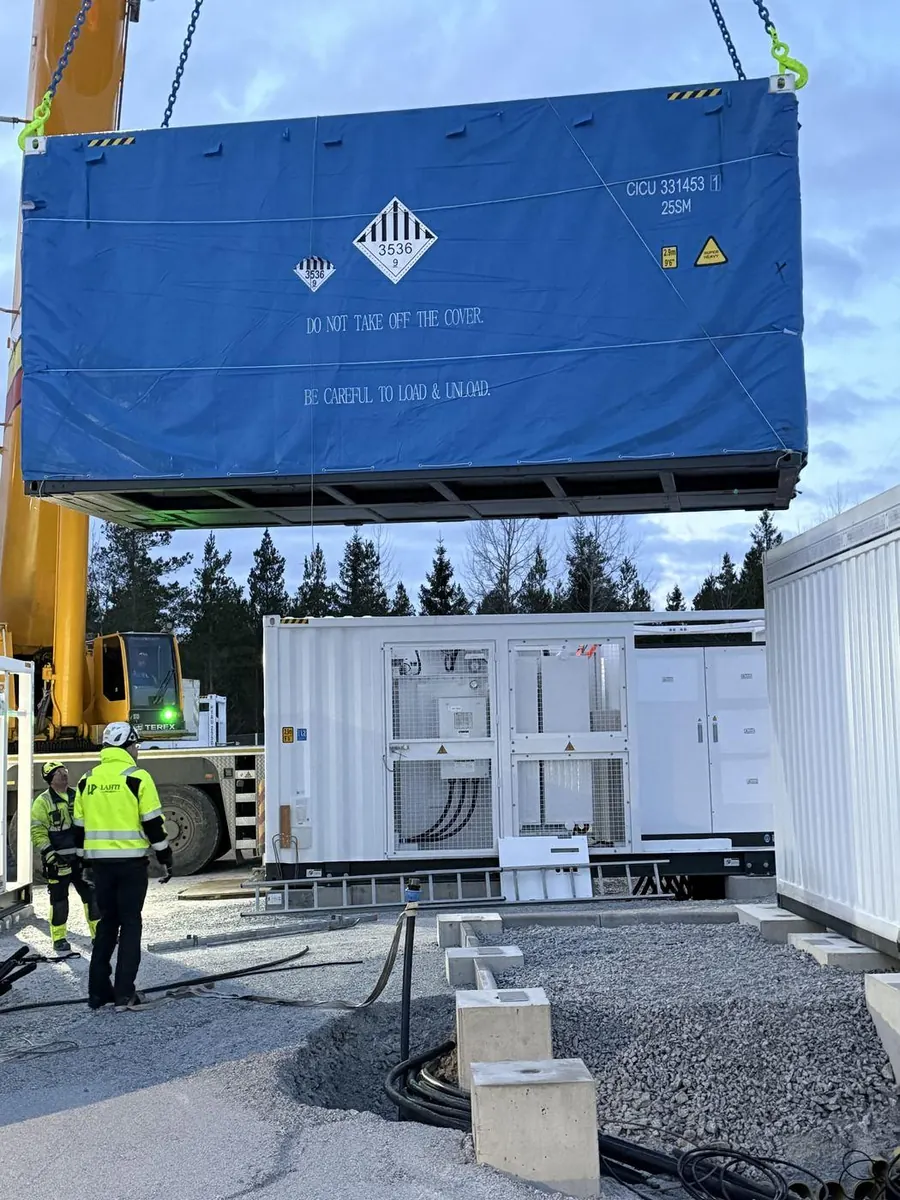
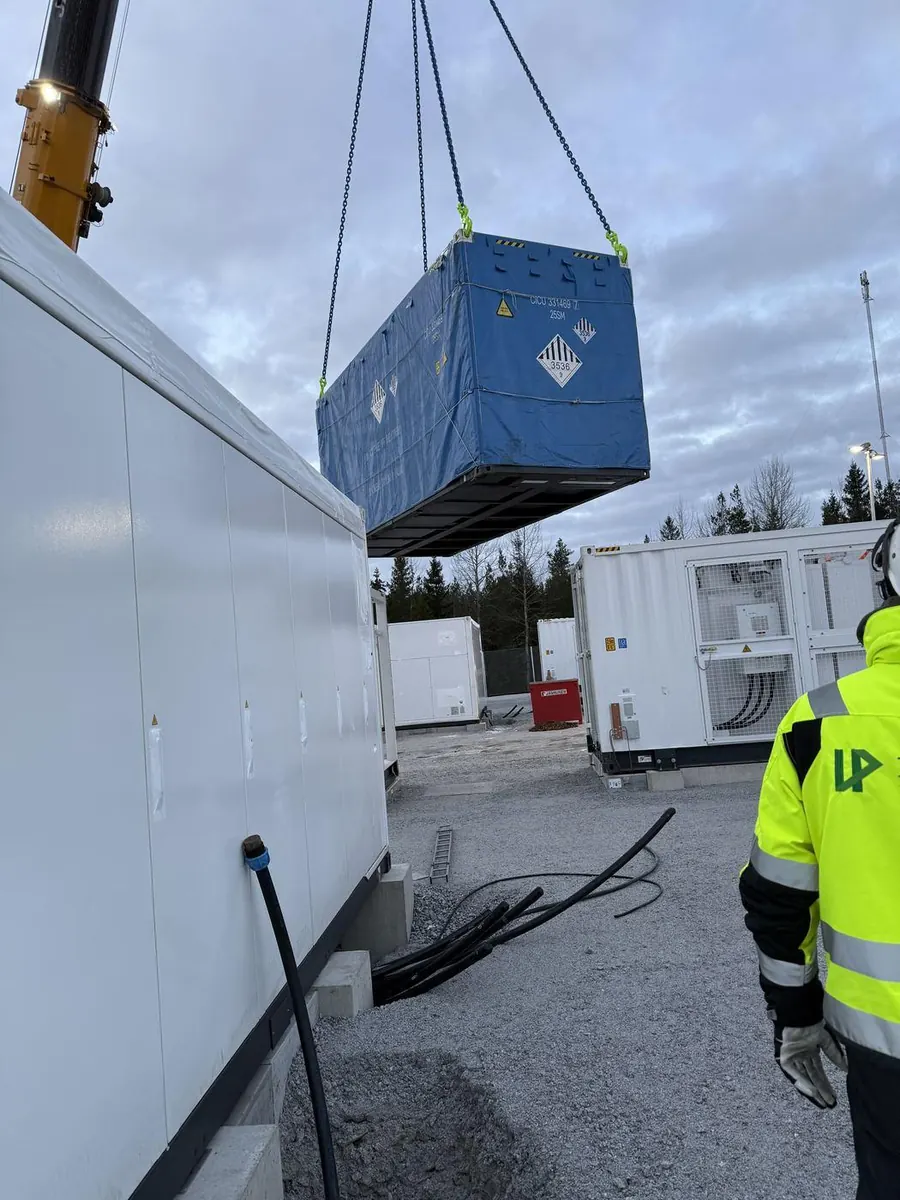
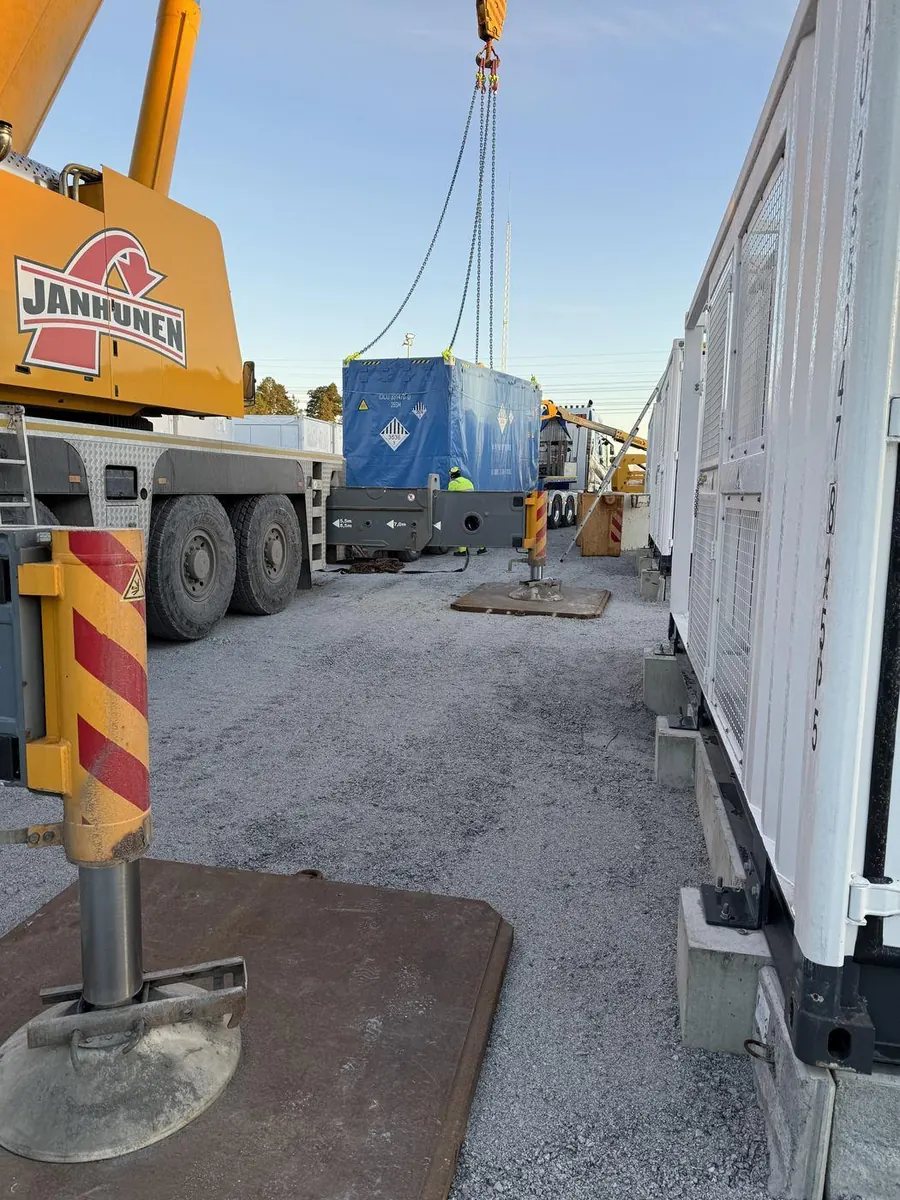
From start to finish – battery park in central Finland
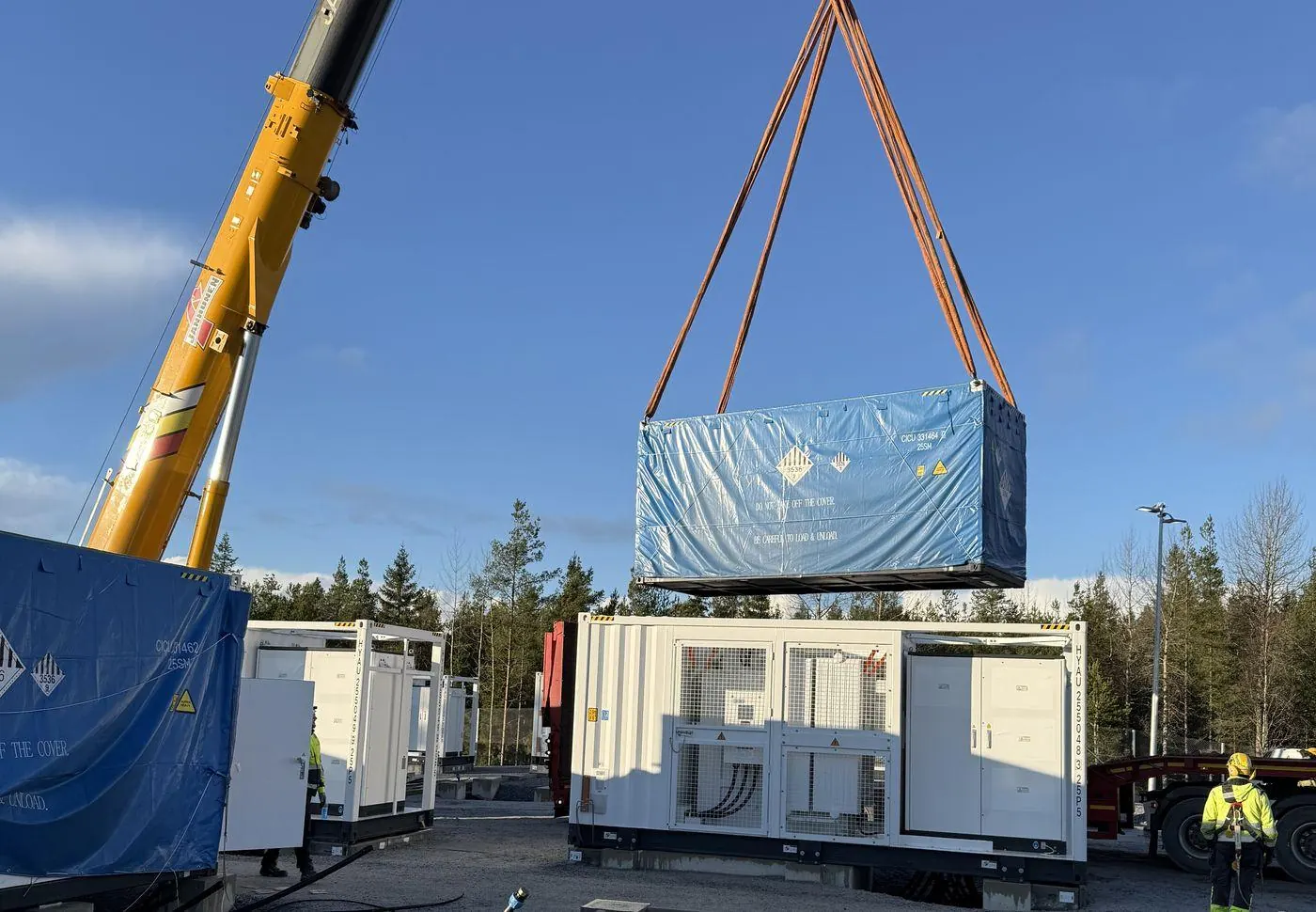
One of our complete projects: a battery park where we were involved all the way – from groundwork in the summer of 2025 to delivery and installation in the winter of 2025.
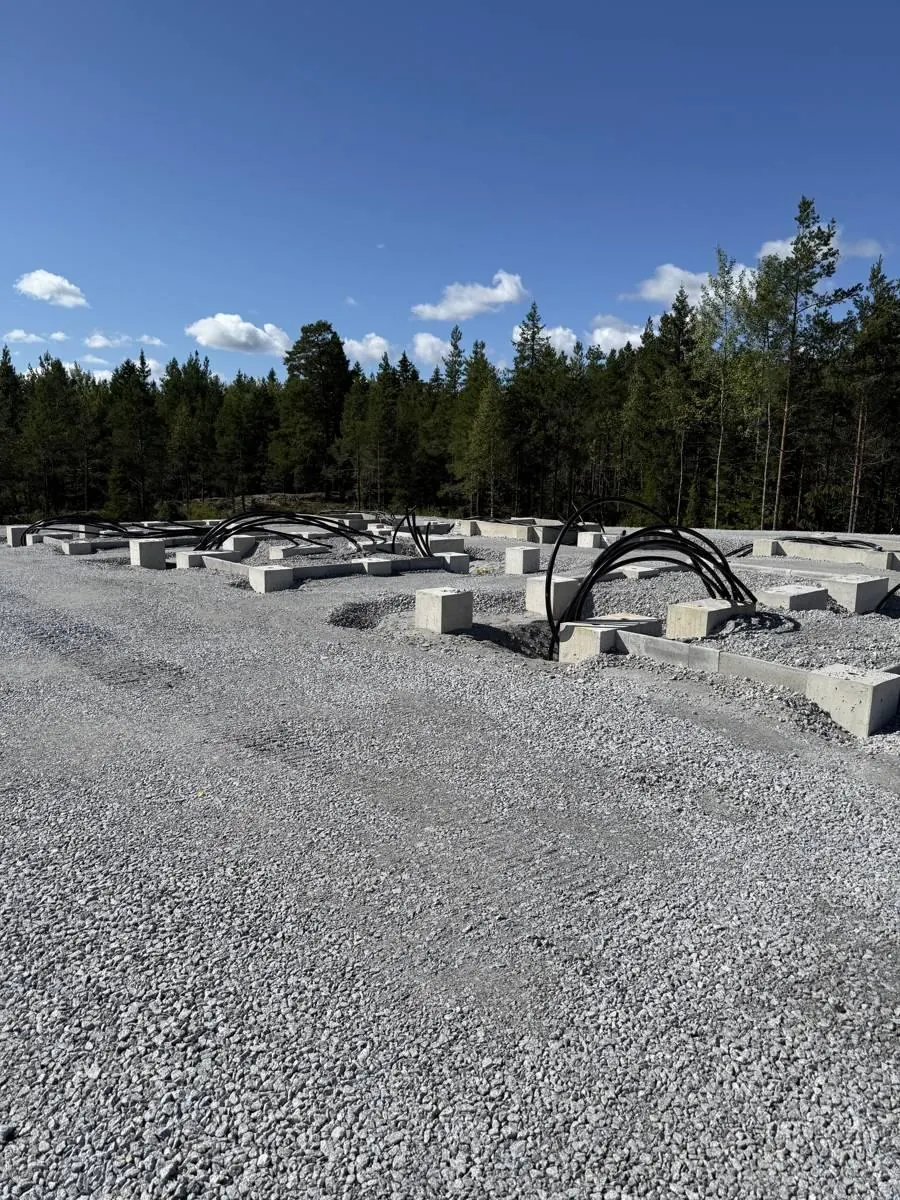 Aug 2025 · Groundwork
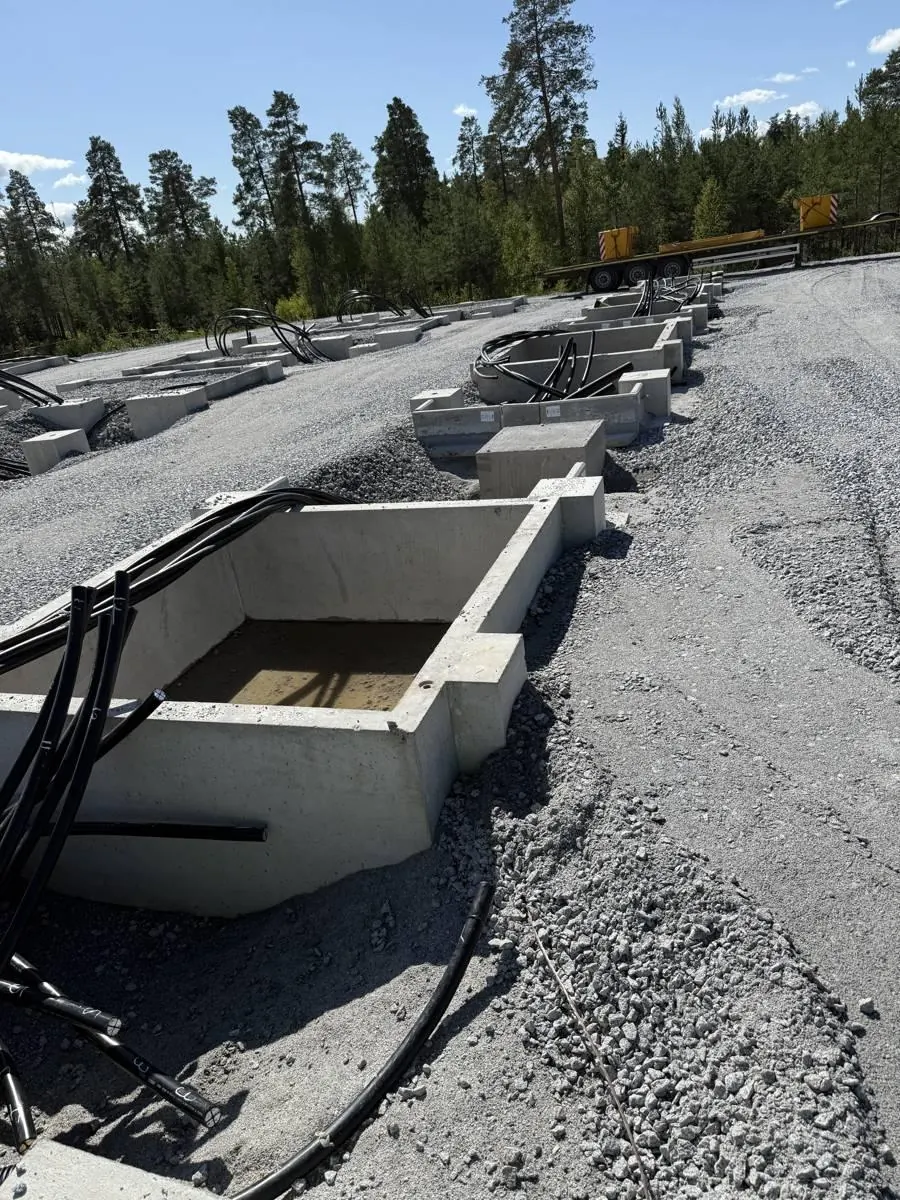 Aug 2025 · Cabling
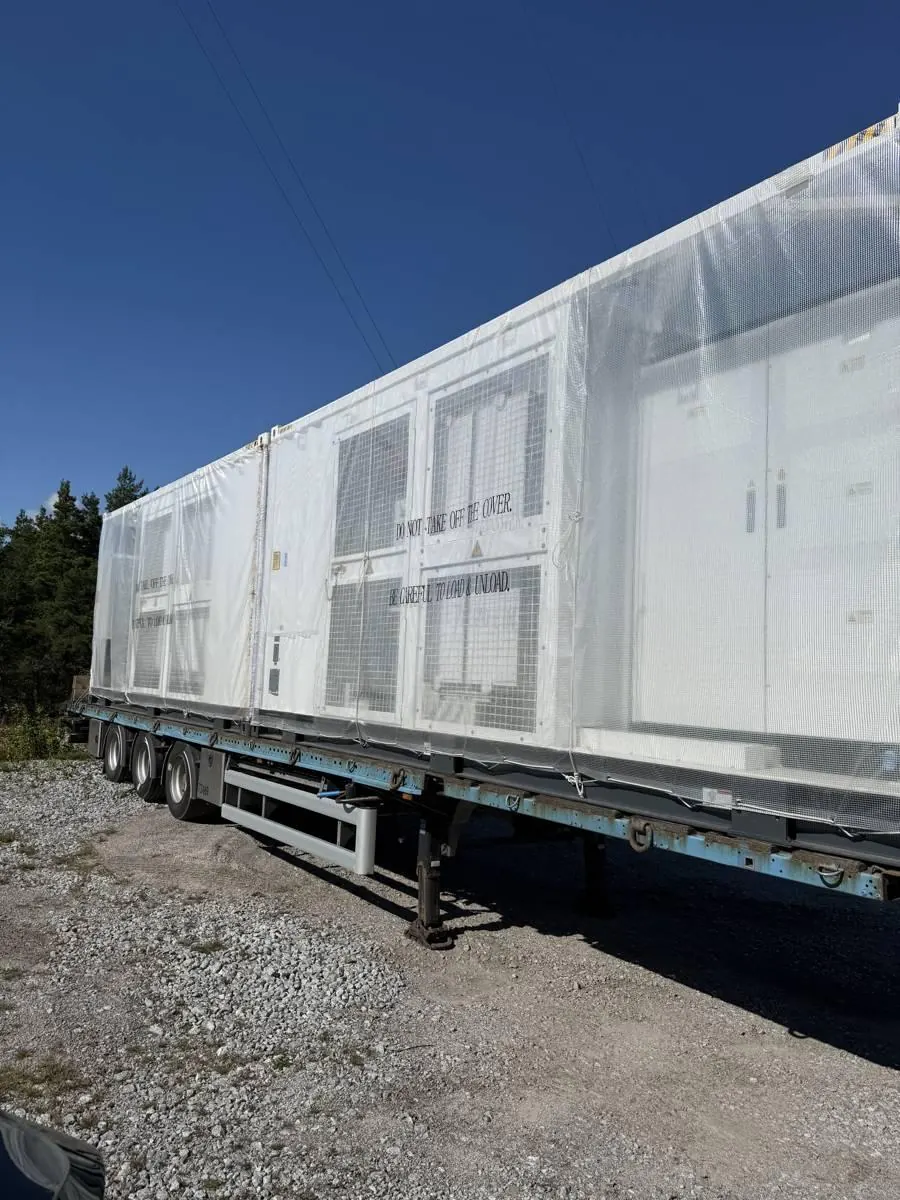 Aug 2025 · Delivery
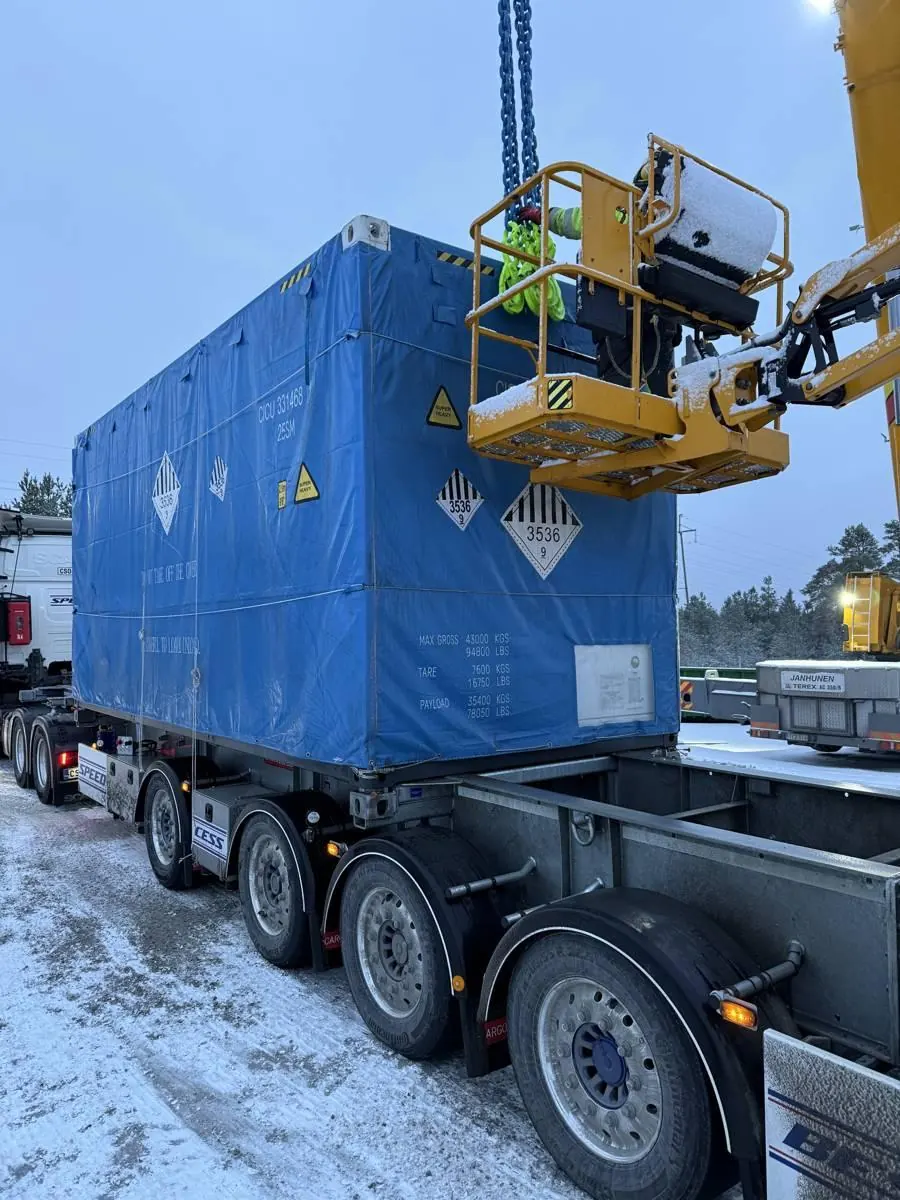 Nov 2025 · Delivery
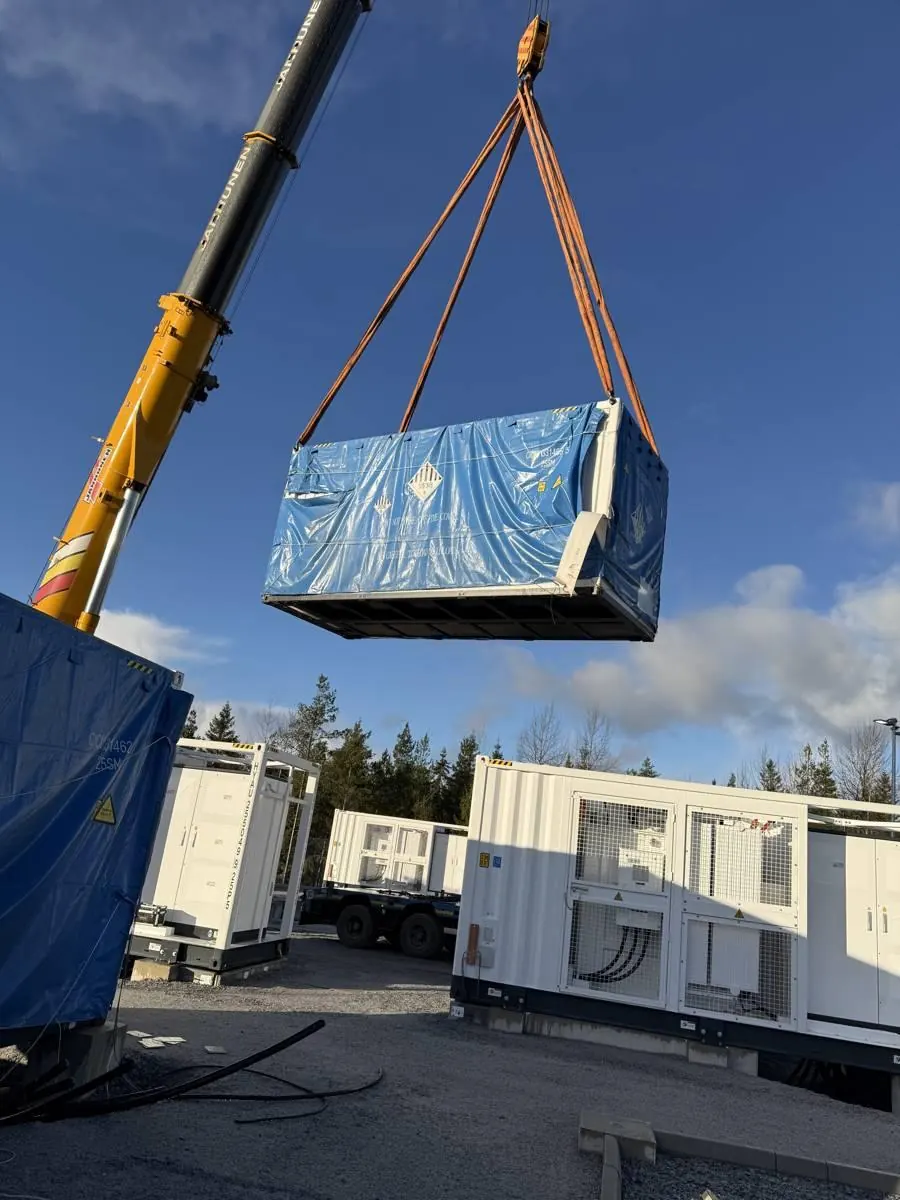 Nov 2025 · Lifting
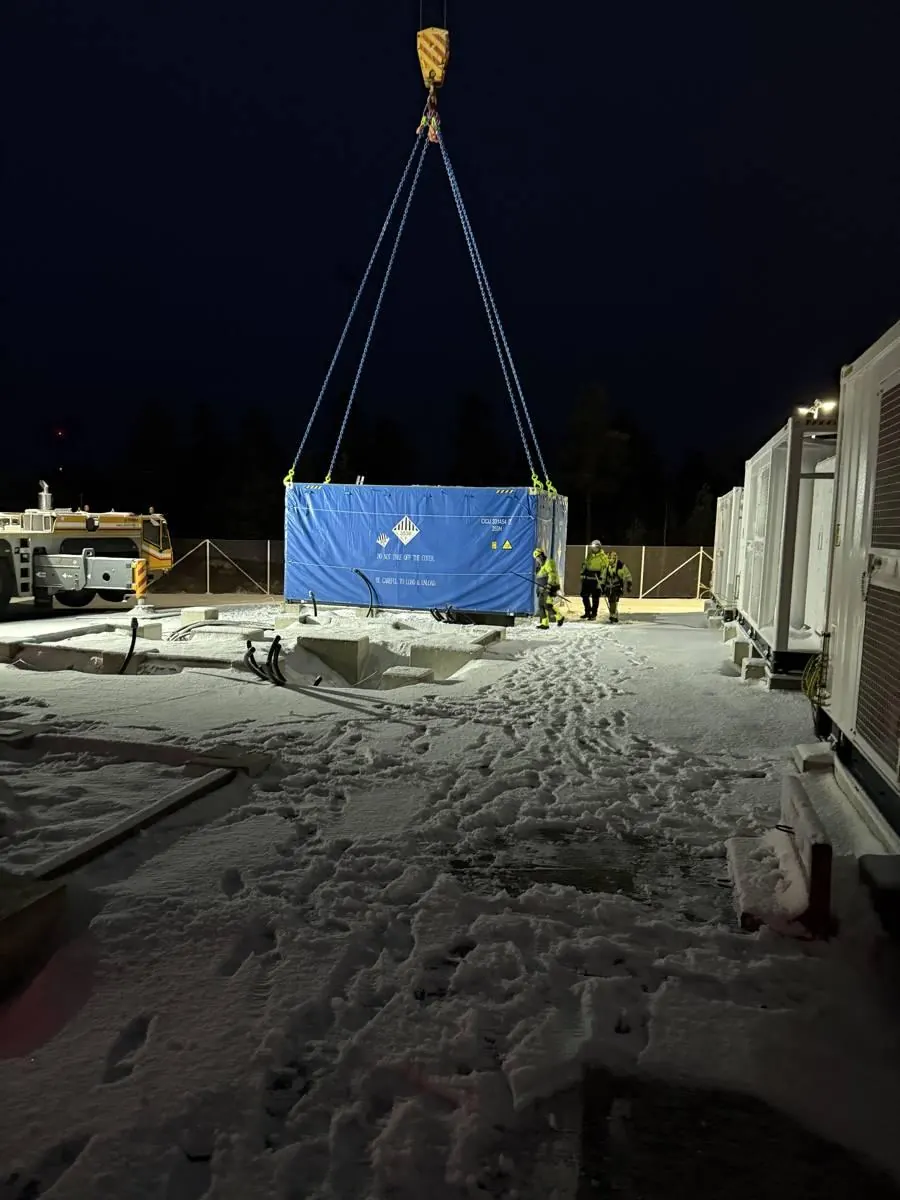 Nov 2025 · Assembly
From order to operational installation.
- Site survey and quote
We assess the site, power requirements and grid connection – and provide a clear written quote.
- Procurement
We obtain prices from several manufacturers and find the best combination of price and quality.
- Delivery inspection
We meet the delivery on site, inspect and document – before anything is signed for.
- Installation
Certified technicians and authorised electricians install and commission the installation.
- Operation and on-call
Service agreement with remote monitoring, periodic maintenance and 24/7 on-call support.
Nordic from top to bottom.
Software made in the Nordics
All software we use for monitoring and control is developed in the Nordics – with Nordic standards for quality and privacy.
Server in Norway
All data is stored on a server located in Norway. Your operational data never leaves the country.
Local teams in four countries
Our own teams in Norway and Finland, a partner in Sweden and service vehicles in Denmark – always local expertise.
FAQ.
Why do I need a delivery inspection when the equipment is new?
New equipment often travels thousands of kilometres by ship, rail and truck before it reaches your site. Vibration, salt water, moisture and impacts cause damage that is not always visible from the outside. After more than 100 installations across the Nordics, we know that rust and transport damage to batteries and containers are common – and if discovered too late, you often lose your right to compensation.
What happens if you find damage at delivery?
We document all deviations with photos and a written report before the delivery is signed for. The report can be used directly as the basis for a claim against the carrier or supplier. We can then repair the damage so the installation still goes into operation as quickly as possible.
What does the 24/7 on-call service include?
Our on-call phone is staffed around the clock, all year round. When a fault occurs, we first connect to the installation remotely – many faults are resolved in minutes without a site visit. If a visit is needed, we dispatch the nearest of our 24 service vehicles in the Nordics.
What do remote monitoring and remote control mean in practice?
With a service agreement we monitor your installation in real time. We often see faults before you notice them, and can restart systems, update software and adjust settings remotely. All software is made in the Nordics and the server is located in Norway – your data never leaves the country.
Why is battery cooling so important?
Battery storage systems depend on the right temperature for both lifetime and safety. A faulty cooling system or the wrong amount of refrigerant can cause reduced capacity, faster ageing and, in the worst case, serious failures. Our refrigeration technicians are licensed for work on cooling systems and refrigerant replacement.
Can you help us choose the right equipment and get the best price?
Yes. We have direct contact with manufacturers of several brands and obtain prices from different suppliers. That way you get the best possible price with the best quality – and an independent recommendation based on your actual needs.
Which chargers and battery systems do you work with?
We have specialist expertise in the chargers and battery storage systems we supply ourselves in the Nordics, but we also service, repair and inspect other brands. Get in touch and we will quickly clarify whether we can help with your specific installation.
Where in the Nordics do you operate?
Across the entire Nordic region. We have 10 service vehicles in Sweden, 6 in Finland, 5 in Norway and 3 in Denmark – 24 vehicles in total. In Finland everything is handled by our wholly owned sister company Globe Energy Finland Oy, and in Sweden we work with Globe Energy Sverige AB.
Do you offer service agreements?
Yes. A service agreement includes periodic maintenance, remote monitoring, priority call-out and access to the 24/7 on-call service – giving higher uptime, longer equipment lifetime and predictable costs.
Can you take responsibility for the entire project?
Yes, we can take on the entire project from start to finish: planning, procurement, delivery inspection, installation with authorised electricians, commissioning and ongoing operation. You get one point of contact throughout the entire process.
BESS explained – 10 key terms you should know.
A BESS (Battery Energy Storage System) is a complete energy storage system that stores electrical energy in batteries and makes it available when needed. A complete system consists of far more than the battery cells: battery modules and racks, a BMS, PCS/inverter, energy management (EMS), thermal management, protection and switchgear, fire and safety systems, plus monitoring and communication. BESS is used for peak shaving, load balancing, energy arbitrage, backup power, integration of solar and wind, grid support and fast charging. Here we explain the most important terms – in a practical and technical way.
01. State of Charge (SOC)
Describes how much energy is stored in the battery right now, as a percentage of its available capacity. 100% means fully charged; 0% is the lower limit the system allows. The energy management system uses SOC to decide when the battery should charge, deliver energy or reserve capacity for backup. A BESS should not be operated continuously between absolute 0 and 100% – the manufacturer defines a recommended operating window that balances energy, performance, safety and lifetime.
02. State of Health (SOH)
Describes the battery’s condition compared with when it was new. SOH is affected by capacity loss, internal resistance, temperature, cycle count and time in operation. As SOH declines, the available energy – and in some cases the available power – gradually decreases. A system must therefore not only perform at delivery but also retain sufficient capacity after years of operation – always consider the manufacturer’s guaranteed capacity and end-of-life criterion during project planning.
03. C-rate – charge and discharge rate
Indicates how fast a battery is charged or discharged relative to its nominal capacity. 1C theoretically means the full capacity in about one hour, 0.5C about two hours and 2C about half an hour – provided the system is specified for it. C-rate affects power, heat generation, efficiency and ageing, so cells, BMS, PCS and cooling must be sized for the desired rate. Always distinguish energy capacity (kWh/MWh) from power (kW/MW): two batteries can store the same energy but have very different maximum power.
04. Energy capacity (kWh/MWh)
Describes how much energy the battery can store. A 1 MWh system theoretically holds 1,000 kWh at nominal conditions, but the actually usable energy depends on the permitted SOC window, DoD, temperature, SOH, PCS limitations and control strategy. Nominal capacity is therefore not the same as net deliverable energy. Sizing should consider energy demand, runtime, power, reserve capacity and expected degradation over the project lifetime.
05. Power rating (kW/MW)
Describes how fast the BESS can absorb or deliver electrical power. A battery may, for example, have 1 MWh of energy capacity and 500 kW of power – which, simplified, gives around two hours of operation at full power. Power is not determined by the battery alone: the PCS, cables, protection, transformer, cooling and grid connection must also handle it. Rule of thumb: power = how fast energy is delivered; energy = how much is available.
06. Round-Trip Efficiency (RTE)
Describes how much of the stored energy can be retrieved again. If 100 kWh is put in and 90 kWh can be delivered back, the round-trip efficiency is 90%. Losses occur in the cells, PCS/inverter, transformers, cables and cooling, and vary with load, temperature, SOC and operating strategy. RTE is especially important for energy arbitrage and peak shaving – use the system’s real net efficiency in financial calculations, not a single component value.
07. Depth of Discharge (DoD)
Indicates how much of the battery’s available capacity has been used. 80% DoD means 80% has been used and roughly 20% remains in reserve. DoD is directly linked to lifetime: deeper and more frequent cycles stress the cells more than shallow ones. Battery lifetime is therefore quoted together with conditions for DoD, temperature, C-rate and SOC window. A larger battery can in some cases deliver the same usable energy at a lower DoD – and thus last longer.
08. Cycle life
Describes how many charge and discharge cycles the battery can complete before reaching the manufacturer’s end-of-life criterion, for example a defined remaining capacity. A “cycle” is not necessarily one full charge and discharge – several partial cycles can together represent one Equivalent Full Cycle (EFC). Real lifetime is affected by temperature, C-rate, DoD, average SOC, calendar ageing and operating pattern – so assess expected use over the entire project lifetime, not just the quoted cycle count.
09. BMS – Battery Management System
The battery’s monitoring and protection system. It measures cell voltage, current and temperature and calculates values such as SOC and SOH. The BMS monitors the cells, identifies deviations, protects against over- and under-voltage, controls temperature limits and supports cell balancing. In larger systems the BMS communicates with the PCS, EMS and other control systems. The BMS is central to safety – good design is about how the whole battery pack is monitored, protected and controlled.
10. PCS – Power Conversion System / inverter
The interface between the battery’s direct current (DC) and the grid or load on the alternating current (AC) side. The PCS controls energy flow in both directions: from the grid to the battery when charging, and from the battery to the grid or load when discharging. The PCS determines how much power can be delivered or absorbed, and may also provide grid support, power factor and protection functions. The interplay between battery, BMS, PCS and EMS is decisive in a complete BESS.
How does a complete BESS fit together?
A BESS works as an integrated system where several components operate together:
| Battery cells / modules / racks | Store the electrical energy. |
| BMS | Monitors the battery and provides protection and balancing. |
| PCS | Converts between DC and AC and controls charge/discharge power. |
| EMS | Optimises energy flow and decides when the battery charges or delivers. |
| Thermal management | Keeps the batteries within the recommended temperature range. |
| Protection & switchgear | Protects the system and enables safe isolation. |
| Fire & safety systems | Monitor and manage safety risks. |
| Monitoring / SCADA | Provides operational monitoring, alarms, logging and integration. |
How do you choose the right BESS size?
Good BESS design starts with the application. Typical questions in a sizing analysis:
- How many kW or MW must the system be able to deliver?
- How many kWh or MWh must be available?
- For how long should the battery deliver the desired power?
- How often will the battery be charged and discharged?
- What DoD and SOC reserve are desirable?
- How will temperature and operating conditions affect performance?
- What capacity and power must remain available after years of operation?
- How should the BESS integrate with the grid, solar, chargers or existing energy systems?
This text is general technical information. Specific values, warranties and operating limits must always be verified against the relevant manufacturer’s datasheet, system configuration and the applicable project requirements.
Part of the Globe Energy group.
Globe Energy Charge AS is a wholly owned subsidiary of Globe Energy Norway AS – backed by a strong Nordic network. The parent company is the exclusive Nordic distributor for DENAIR and the official distributor for GRASEN – Globe Energy Charge AS is the group’s service and installation company.
Globe Energy Charge AS
A wholly owned subsidiary of Globe Energy Norway AS. Responsible for service, installation and inspection in Norway and Denmark.
Globe Energy Finland Oy
Our wholly owned sister company Globe Energy Finland Oy handles all assignments in the Finnish market – with its own technicians and 6 service vehicles.
Globe Energy Sverige AB
Our partner in Sweden, with 10 service vehicles covering the Swedish market.
Our brands
As the group’s service company, we have direct access to spare parts, software and factory support for the brands we deliver across the Nordics.
GRASEN
Globe Energy Norway AS is the official distributor for GRASEN in the Nordics – AC and DC chargers plus battery storage (BESS). We handle installation, service and 24/7 on-call for all GRASEN systems.
grasen.no →DENAIR
Globe Energy Norway AS is the exclusive Nordic distributor for DENAIR compressors. We provide service and maintenance for DENAIR products across the Nordics.
denair.no →Globe Energy
Learn more about the Globe Energy group and all our brands on the group website.
globeenergy.no →Is your equipment being delivered soon?
Book a delivery inspection before the container arrives – or request a quote for installation, service, a service agreement or the entire project. We respond quickly, around the clock.
Globe Energy Charge AS · Org.nr NO 937 083 270 MVA
Fjellvegen 1B, 8685 Trofors, Norge